Hourly Service Invoice Template
Managing and running a small business while keeping clients satisfied can be challenging. Maintaining a strong reputation is essential for a business to thrive. Many service-based businesses charge clients by the hour for convenience and transparency. For these businesses, an hourly service invoice is a crucial tool, allowing them to accurately track time worked and bill clients efficiently.
Most projects billed using an hourly service invoice typically follow a standard procedure: multiplying the number of hours worked by the agreed hourly rate. In some cases, however, this method may not apply, as other factors, such as materials, travel expenses, or additional fee may be used to determine the total cost of the project.
Hourly Service Invoice Overview
An hourly service invoice is specifically designed for service providers who charge their clients based on the number of hours worked. When your services are complete and you are ready to request payment, you can use an invoice to create a professional, organized, and easy-to-understand bill for your client.
This type of invoice clearly records the hours worked, the applicable hourly rate, and any additional charges, ensuring transparency in billing. While each service provider may have their own method of receiving payments, an hourly service invoice standardizes the process, making it straightforward to calculate the total amount due.
Beyond the hourly rate, the hourly service invoice includes all the essential elements of a standard invoice—such as service description, invoice number, dates, taxes, and payment terms. It is widely used by freelancers, consultants, content writers, gardeners, and other professionals or businesses whose fees are based on the time spent delivering services.
Key Details for an Hourly Service Invoice
An hourly service invoice helps service providers bill clients based on the actual hours worked, ensuring clarity and transparency. While the exact details may vary depending on the provider or industry, certain information is standard and should be included in every hourly service invoice:
- Company Information: Include your company’s name, address, contact number, email, website (if any), and logo at the top of the invoice. This helps clients easily identify the sender.
- Customer Information: Provide the name and contact details of the client or organization receiving the invoice.
- Invoice Number and Date: Assign a unique invoice number for record-keeping, and include the date the invoice is issued.
- Service Details: List all services provided, preferably numbered if multiple tasks were completed. This section should clearly describe each service rendered.
- Hours Worked and Hourly Rate: Specify the number of hours spent on each service and the corresponding hourly rate.
- Total Amount: Calculate the total payment by multiplying the hours worked by the hourly rate, and include any additional charges if applicable.
- Payment Terms and Mode: State the payment due date, accepted payment methods (e.g., bank transfer, online payment), and the recipient of the payment.
- Purpose of Payment and Terms: Optionally, include the purpose of the payment and any additional terms, conditions, or agreements relevant to the invoice.
Including these key details in your hourly service invoice ensures professionalism, simplifies billing, and helps avoid confusion between service providers and clients.
Invoice Components in an Hourly Service Template
An hourly service invoice is typically divided into several key sections to clearly communicate the work performed, the rates applied, and the total amount due. Each component helps ensure transparency and makes it easy for clients to understand the charges.
- Description: A brief summary of the projects or services provided to the client.
- Work / Tasks: Specific tasks or activities completed during the service period.
- Specifications: For example, for content writers, this could include the total number of hours worked or words written; for other professionals, it could list measurable units of work.
- Rate: The charge per hour, per word, or according to any other predefined division.
- Amount / Total: The calculated charge for each task (Rate x Hours/Units).
- Subtotal: The sum of all amounts before taxes or discounts.
- Taxes: Any applicable taxes that must be added.
- Tax Rate: The percentage applied to the subtotal to calculate taxes.
- Discounts (if any): Any reductions applied to the subtotal.
- Grand Total: The final amount due after adding taxes and subtracting discounts.
- Other Comments / Remarks: Additional notes, instructions, or clarifications for the client.
Additional Notes:
- If a company has multiple billing rates for different services, the hours and rate fields can be left blank initially and filled manually for each invoice.
- The invoice should be clear, easy to read, and convenient for clients, providing transparency on how charges are calculated.
About the Templates We Have Designed for You
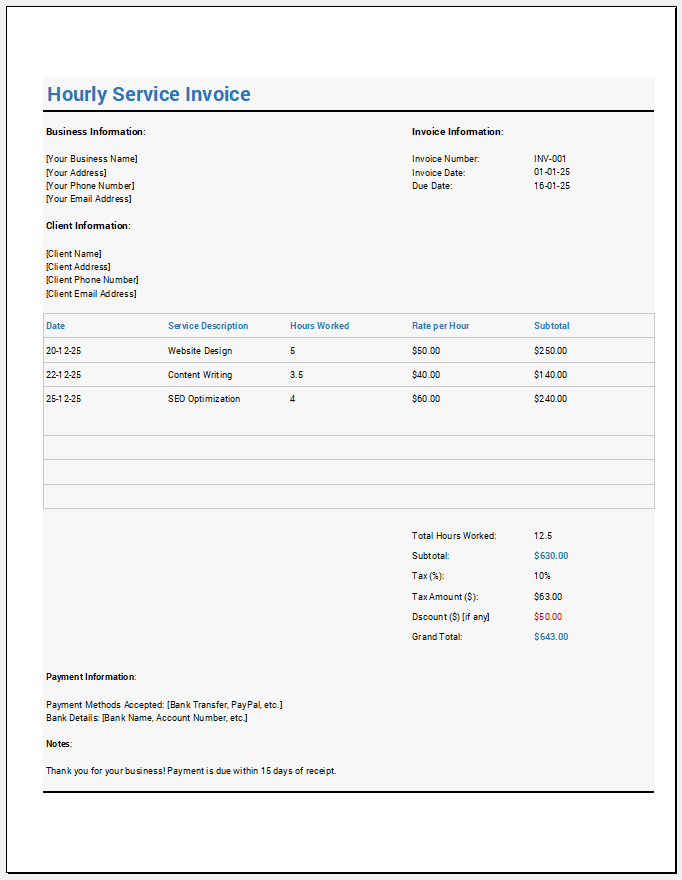
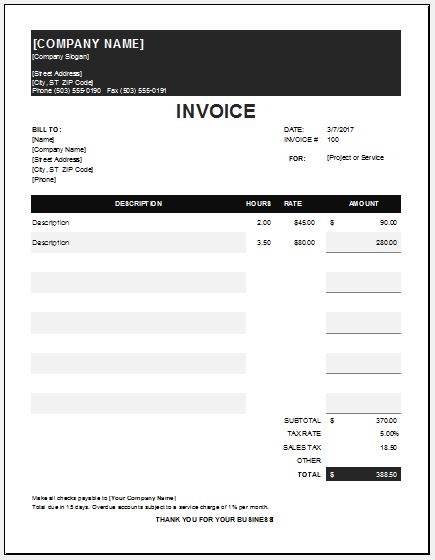
Our hourly service invoice template makes it easy for you to bill clients based on the hours you work. It allows you to record the number of hours spent on each service, calculate the total payment due, assign a unique invoice number, and include all other essential details.
Designed in MS Excel, the template is user-friendly and ready to use—simply enter your service details, hours worked, and rates, and the invoice will automatically calculate totals. You can also include multiple services within a single invoice, making it convenient to bill clients for complex projects or multiple tasks. Once completed, the invoice can be printed or shared digitally.
(Excel Templates)
Format (.xlsx)
MS Excel (.xlsx) Format
- Construction Quotation Template
- Commission Invoice Format for Excel
- Bill of Material Template
- Cash Memo Formats and Template
- Doctor Bill Template
- Cash Bill Template
- Daycare Service Bill Template
- Dental Service Bill Template
- House Cleaning Service Bill Template
- Catering Service Bill/Invoice Templates
- Hourly Service Bill/Invoice Templates
- Consulting Service Bill/Invoice Templates
- Cleaning Service Bill/Invoice Templates
- Tow Service Bill/Invoice Templates
- Work Order Bill/Invoice Templates
← Previous Article
Personal Weight Loss Chart TemplateNext Article →
Service Invoices
Leave a Reply