Weekly Sales Report Template
Companies must find ways to improve their teams’ performance in order to increase sales. Sales analysis reports are essential for businesses because they provide managers and sales representatives with a clear overview of sales processes, helping to enhance performance and support business growth.
To remain competitive in today’s market, companies should implement a proper sales reporting procedure. Depending on their goals, businesses may prepare daily, weekly, or monthly sales reports. The following focuses specifically on the weekly sales report.
What is a Weekly Sales Report?
A weekly sales report records a company’s sales activities and performance over the course of a week. It helps the company determine whether its employees are meeting the sales targets that have been set.
This report allows managers to identify trends in sales data early. By reviewing weekly figures, they can take timely action to address declining sales and make adjustments to ensure quarterly and annual sales goals are met. In essence, the weekly sales report serves as a tool for proactive decision-making to maintain or boost sales performance.
Creating a Weekly Sales Report
If you want to create a formal weekly sales report, consider the following points:
Report Format
The report should be professional and easy to read. Include a clear heading such as “Weekly Sales Report for [Week/Department]” and specify the exact dates it covers. You can also mention the relevant department or team and provide a section for additional comments or observations.
Table Format
The key details of the report should be presented in a table with appropriate columns for each important metric. Rows can represent the days of the week. Depending on the type of business, you can include columns that reflect relevant sales activities.
For example:
- Calls made: Include cold calls, follow-up calls, or other relevant call types.
- Emails sent: Track outreach emails.
- Meetings conducted: Record in-person or virtual meetings.
- Visits completed: Capture any client or site visits.
- Leads generated: Count the potential new clients or sales opportunities.
- Deals closed / Products sold: Record completed sales transactions.
- Sales revenue: Track the total revenue generated.
- Target amount: Include weekly sales targets.
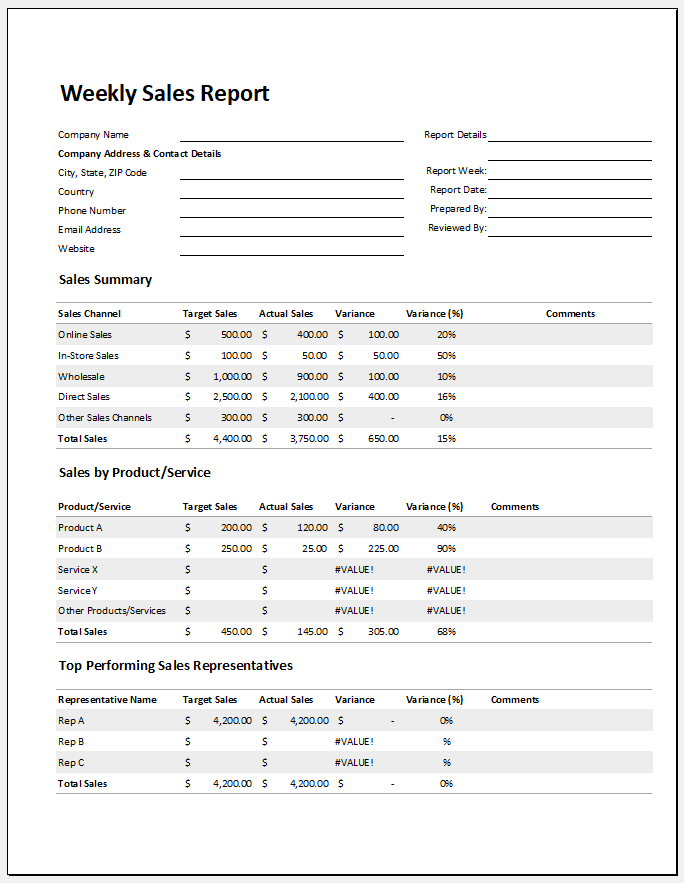
- Variance: Show the difference between actual sales and targets to quickly identify whether goals were met.
- Notes / Comments: Use this section to explain why targets were not met or to highlight challenges the team faced. This provides context and helps management understand any obstacles affecting performance.
Using this structured approach ensures that your weekly sales report is comprehensive, professional, and easy to analyze, allowing for better decision-making and performance tracking.
Importance of a Weekly Sales Report
The weekly sales report is important because it tracks a company’s sales activities over a specific week. It provides actionable insights into a team’s daily efforts, helping managers understand which opportunities were generated, which deals were closed, the number of calls made, and other key performance indicators (KPIs).
This report allows managers to monitor what sales representatives have pursued each working day. It also helps identify operational bottlenecks early, giving a clear overview of the company’s sales activities in detail.
When prepared properly, a weekly sales report enables managers to track the performance of their sales team effectively. Based on the insights provided, they can develop strategies to improve sales and support business growth. Additionally, it helps managers identify if any sales representative is underperforming and take corrective action to ensure the company does not miss out on potential opportunities.
How a Weekly Sales Report Template Helps?
- Tracks Sales Performance Easily: It organizes all data for the week in one place, showing totals, daily breakdowns, and product-wise performance. It helps managers and sales teams see whether weekly targets are being met.
- Identify Trends and Opportunities: By reviewing sales data weekly, patterns emerge, such as best-selling products or peak sales days. It helps uncover potential opportunities for upselling or improving weak areas.
- Monitors Team Productivity: Tracks calls made, deals closed, meetings held, and other key activities. It highlights which sales representatives are performing well and who may need support or guidance.
- Supports Strategic Planning: Provides data for planning promotions, sales campaigns, or adjustments in resource allocation. It helps create more realistic targets and actionable strategies.
Here is the template with all the functionalities mentioned above. We hope you like it.
Excel Template: 76 Kb
- Children’s Daily Activity Reward Sheet
- Winter Clothing & Gear Budget Sheet
- Winter Utility Expense Template
- Fuel & Equipment Sheets
- Monthly Attendance Sheet for Employees
- Student Entry & Exit Log
- Gantt Chart for Smaller Projects
- Behavior Log of Child for Schools
- Loan Repayment Tracker
- Product Sales Tracker Template
- Debit Memo Template for Excel
- Winter Attire Inventory
- Financial Projections Worksheet
- Employee Absence Tracker
- Weekly Sales Report Template
← Previous Article
Budget Vs Actual StatementNext Article →
Employee Absence Tracker