Fitness Progress Tracker for Men
Regular exercise plays a vital role in maintaining overall health and well-being. Many men set fitness goals to improve their strength, endurance, and physical appearance. Setting goals that are both realistic and challenging helps create a balanced and effective workout routine. When goals are clearly defined, workouts become more focused, productive, and results-driven.
Tracking progress alongside goal setting significantly boosts motivation and discipline. It provides structure to your fitness routine and allows you to evaluate your performance over time. By consistently monitoring your progress, you can identify areas that need improvement and make necessary adjustments to your workout plan. A fitness progress tracker keeps you organized, motivated, and committed to your fitness journey.
What Is a Fitness Progress Tracker for Men?
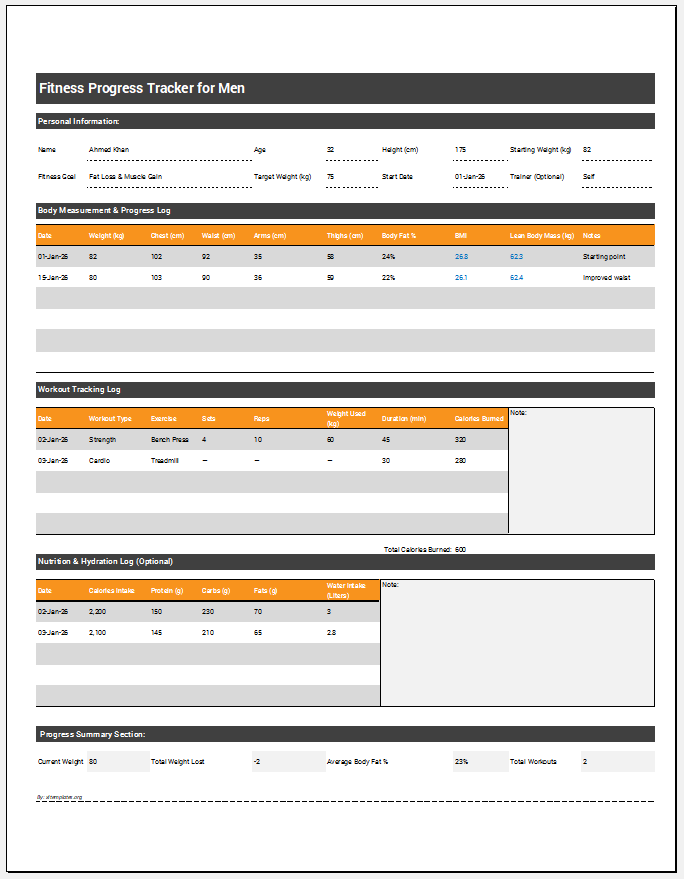
A fitness progress tracker for men is a structured chart or log used to record important fitness data such as weight, chest, waist, hips, body fat percentage, and estimated Body Mass Index (BMI). It helps individuals monitor their physical changes over time and evaluate the effectiveness of their fitness program.
By maintaining accurate records, men can clearly see where progress is being made and where improvements are needed, making it easier to stay aligned with their fitness goals.
Importance of a Fitness Progress Tracker for Men
Using a fitness progress tracker provides several key benefits:
- Keeps you focused on your goals
- Helps identify obstacles and areas for improvement
- Encourages realistic goal setting
- Maintains motivation and consistency
- Provides measurable proof of progress
Regularly reviewing your progress builds confidence and reinforces commitment. Seeing tangible results, such as muscle gain or fat loss, motivates you to continue your fitness program with greater determination and clarity.
To get the most out of your fitness progress tracker, it’s important to design it in a way that is easy to use, comprehensive, and tailored to your specific goals. A well-structured tracker not only records essential measurements and workout data but also helps you visualize your progress over time. Whether you are tracking muscle gain, fat loss, or overall fitness improvements, a thoughtfully designed tracker ensures that you can analyze trends, adjust your routines, and stay motivated throughout your fitness journey.
Tips for Creating a Fitness Progress Tracker for Men
A fitness progress tracker can be created by gyms for their members or by individuals for personal use. Regardless of the purpose, the following tips will help you design an effective tracker:
1. Choose the Right Application
Select a tool that can efficiently store and manage your data. Microsoft Excel or Google Sheets are excellent options, as they allow you to create tables, apply formulas, and visualize progress through charts.
2. Add a Clear Title
Use a precise heading such as “Fitness Progress Tracker for Men” to clearly define the purpose of the document.
3. Include Gym Details (Optional)
If the tracker is designed for a gym, include the gym’s name, logo, and address to give it a professional and branded appearance.
4. Record Basic Information
Include essential personal details such as height, as it is important for accurately interpreting weight changes and calculating BMI.
5. Use a Structured Table Layout
Design the tracker in a table format to ensure clarity and organization. Tables make it easier to input data and review progress over time.
6. Add Date Column
Include a date column to record when each measurement is taken. This helps track progress over specific time periods.
7. Track Weight
Record weight in kilograms to monitor increases, decreases, or consistency over time.
8. Track Body Measurements
Include fields for:
- Chest (cm) – useful for tracking muscle growth
- Waist (cm) – important for fat loss goals
- Hips (cm) – helps assess overall body composition
9. Include Calculated Metrics
Add calculated fields such as:
- Body Fat Percentage
- Lean Body Mass
- Body Mass Index (BMI)
These metrics provide deeper insights into your fitness progress and overall health.
By consistently recording your workouts, measurements, and calculated metrics, a fitness progress tracker becomes more than just a log -it turns into a roadmap for achieving your goals. Over time, you’ll be able to identify patterns, celebrate milestones, and make informed adjustments to your routine. This ongoing reflection not only improves your results but also keeps you motivated, accountable, and confident in your fitness journey.
Conclusion
A fitness progress tracker for men is a powerful tool for staying consistent and goal-oriented. It provides a clear picture of physical changes, whether it’s weight loss, muscle gain, or improved body composition. By maintaining accurate and regular entries, you can ensure reliable results and make informed decisions to improve your fitness routine.
Here is the template.
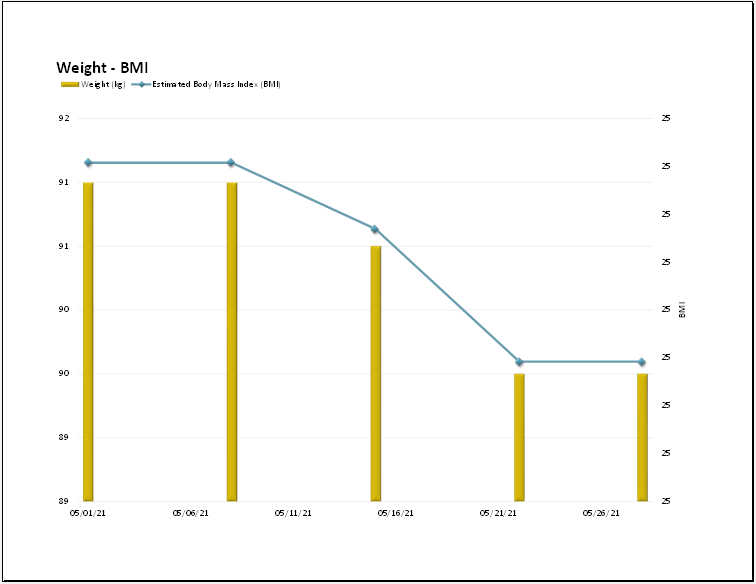
Here is another template from Microsoft Excel.
The template can also be downloaded at templates.office.com
- Children’s Daily Activity Reward Sheet
- Winter Clothing & Gear Budget Sheet
- Winter Utility Expense Template
- Fuel & Equipment Sheets
- Monthly Attendance Sheet for Employees
- Student Entry & Exit Log
- Gantt Chart for Smaller Projects
- Behavior Log of Child for Schools
- Loan Repayment Tracker
- Product Sales Tracker Template
- Debit Memo Template for Excel
- Winter Attire Inventory
- Financial Projections Worksheet
- Employee Absence Tracker
- Weekly Sales Report Template
← Previous Article
Company Vehicle Fuel and Inspection LogNext Article →
Staff Leave Register