Feedback Analysis Worksheet
Feedback analysis is a crucial business process used to evaluate performance and identify areas for improvement. By reviewing feedback from customers, students, or stakeholders, organizations can set clear objectives and make informed decisions.
Beyond business growth, feedback analysis also supports personal and professional development, helping individuals understand their strengths and areas that require improvement.
Why Feedback Analysis Matters
Feedback analysis plays a vital role in understanding how well products, services, or processes are performing. It allows businesses to:
- Identify strengths and weaknesses
- Improve customer satisfaction
- Make data-driven decisions
- Enhance overall efficiency
When feedback is properly analyzed and presented, such as through reports or presentations, it becomes easier to communicate insights and take meaningful action.
Purpose of Feedback Analysis
The main purpose of feedback analysis is to interpret collected feedback and take appropriate action.
If feedback highlights dissatisfaction in a particular area, corrective measures can be implemented to improve performance. Similarly, positive feedback helps reinforce successful practices.
How to Conduct Feedback Analysis
Effective feedback analysis involves a systematic approach. Follow these key steps:
1. Develop the Right Mindset
Approach feedback with an open and growth-oriented mindset. Be willing to accept both positive and negative feedback as opportunities for improvement.
2. Identify Key Areas for Improvement
Evaluate your performance by reviewing achievements and shortcomings. This helps in clearly identifying areas that need attention.
3. Collect Feedback
Gather feedback from relevant sources such as customers, students, or employees. Use multiple channels like surveys, interviews, or forms to ensure comprehensive data collection.
4. Analyze the Data
Organize feedback into categories and identify trends, patterns, and recurring issues.
5. Use a Feedback Analysis Worksheet
Utilizing a structured worksheet or template helps streamline the entire process, making analysis faster, more accurate, and professional.
Feedback Analysis Template
A feedback analysis template is a ready-to-use tool designed to simplify and standardize the analysis process. It is especially useful for individuals who are unfamiliar with formal feedback evaluation methods.
Key Benefits of Using a Template
- Helps set clear objectives based on feedback
- Documents reasons behind decisions
- Tracks actions to be taken
- Includes timelines and expected outcomes
- Maintains a complete record of feedback analysis
Features of the Worksheet
The feedback analysis worksheet is typically created in a spreadsheet format and offers flexibility for customization:
- Add, edit, or delete survey questions
- Modify categories and fields of your requirements
- Record feedback systematically
- Track progress and outcomes
Even after customization, the core structure of the template remains consistent for ease of use.
Reusability and Data Integration
One of the key advantages of this worksheet is its reusability:
- It can be saved and used for multiple projects, courses, or business cycles
- Previously saved survey questions can be imported into new worksheets
- Ensures consistency in feedback analysis across different uses
Anonymous Feedback Option
The template may also include a front page or section that allows participants to provide feedback anonymously. This encourages honest responses and increases the reliability of the data collected.
Conclusion
A feedback analysis worksheet transforms raw feedback into actionable insights. By organizing, analyzing, and tracking feedback effectively, businesses and individuals can continuously improve performance and achieve their goals more efficiently.
Preview
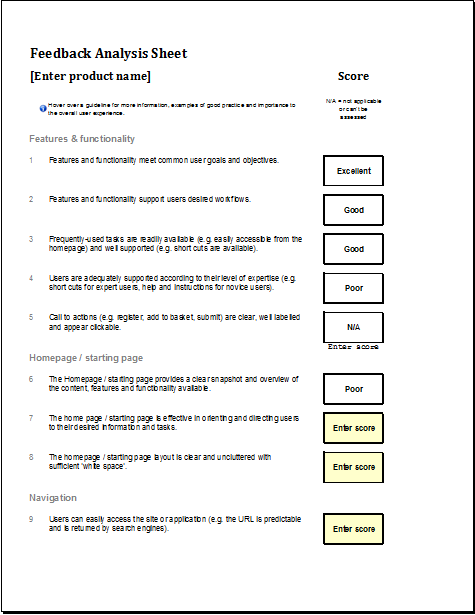
Download your file below. File Size: 116 KB
Source: Usability Review Template
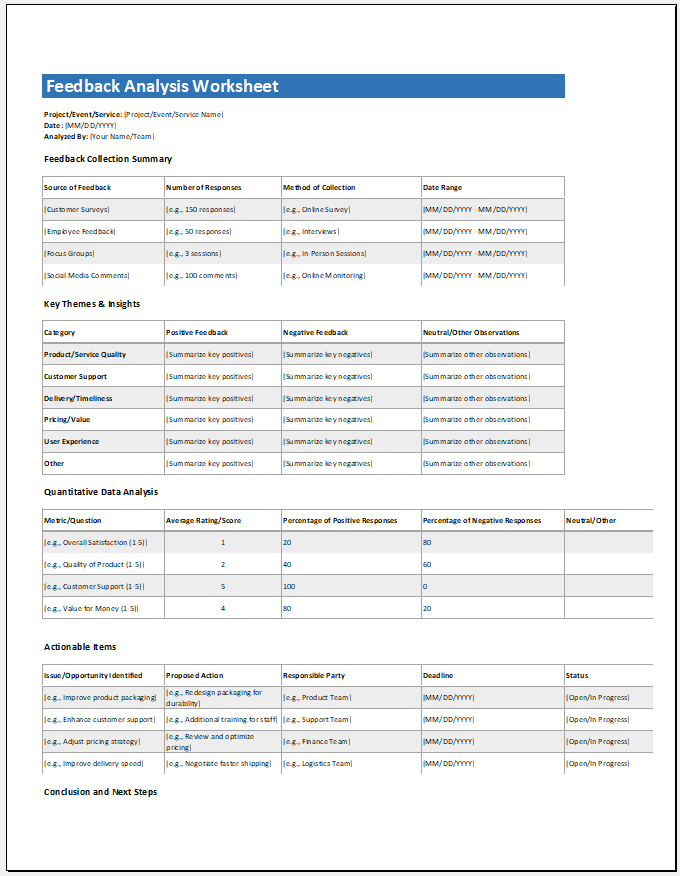
Excel Template File: 214 KB
- Children’s Daily Activity Reward Sheet
- Winter Clothing & Gear Budget Sheet
- Winter Utility Expense Template
- Fuel & Equipment Sheets
- Monthly Attendance Sheet for Employees
- Student Entry & Exit Log
- Gantt Chart for Smaller Projects
- Behavior Log of Child for Schools
- Loan Repayment Tracker
- Product Sales Tracker Template
- Debit Memo Template for Excel
- Winter Attire Inventory
- Financial Projections Worksheet
- Employee Absence Tracker
- Weekly Sales Report Template
← Previous Article
Transportation Cost Analysis WorksheetNext Article →
Issue Management Log
Leave a Reply