Transportation Log Template
A transportation log is used by drivers and transportation companies to record and monitor the movement of vehicles, passengers, or goods. It helps organizations maintain accurate records of transportation activities and ensures smooth operations.
Transportation companies use this log to keep track of vehicles, drivers, routes, and the people or goods being transported. By maintaining a log, companies can monitor the performance and activities of each driver and vehicle effectively.
A transportation log plays a vital role in ensuring that all transportation activities are properly documented and managed. It provides a clear and organized way to record important trip details, helping organizations maintain accuracy, accountability, and efficiency in their operations. By using a structured log, businesses can streamline their transportation processes and make informed decisions based on reliable data.
Purpose of a Transportation Log
A transportation log serves as a monitoring and record-keeping tool. It allows companies to:
- Track vehicle usage and movement
- Record transportation details for goods or passengers
- Maintain accountability for drivers
- Ensure proper coordination of transportation services
Organizations can customize the log by adding relevant details according to their operational needs.
When to Use a Transportation Log
A transportation log is especially useful when a company operates multiple vehicles and needs to monitor each one:
For example:
- Schools use transportation logs for vans and buses that provide daily pick-and-drop services to students.
- Logistics companies use them to track delivery vehicles and shipments.
The log helps record:
- Number of passengers (e.g, students)
- Driver details
- Pickup and drop-off timings
- Routes and destinations
Benefits of a Transportation Log
A transportation log is a valuable tool for managing and monitoring transportation activities efficiently. It provides clear visibility into vehicle usage, driver performance, and trip details. By maintaining accurate records, organizations can improve coordination, reduce errors, and ensure smooth operations.
It offers the following benefits:
Effective Vehicle Monitoring
A transportation log helps track each vehicle transporting goods or passengers. It records routes, cargo details, and destinations, making it easier to identify issues such as delays or incorrect deliveries.
Improved Organization
Managing multiple vehicles can be challenging. A transportation log keeps all information organized, including schedules, routes, and trip details. This makes it easier to retrieve information when needed, especially in case of emergencies or accidents.
Enhanced Safety and Security
For companies transporting valuable goods, a transportation log provides an additional layer of security. It ensures that all movements are recorded and monitored, reducing the risk of misuse or loss. It also helps drivers clearly understand their assigned routes and responsibilities.
Key Information Included in a Transportation Log
A standard transportation log typically includes:
- Date
- Vehicle Number or ID
- Driver Name
- Departure Location
- Destination
- Departure Time
- Arrival Location
- Arrival Time
- Distance Traveled
- Purpose of Trip or Goods Details
How to Create a Transportation Log
You can either download a ready-made template or create a customized one based on your requirements. Follow these steps:
1. Add Header Information
Include:
- Company name
- Log title (e.g., “Transportation Log”)
- Company logo (optional)
2. Record Transportation Details
Add fields for:
- Driver’s name
- Vehicle number
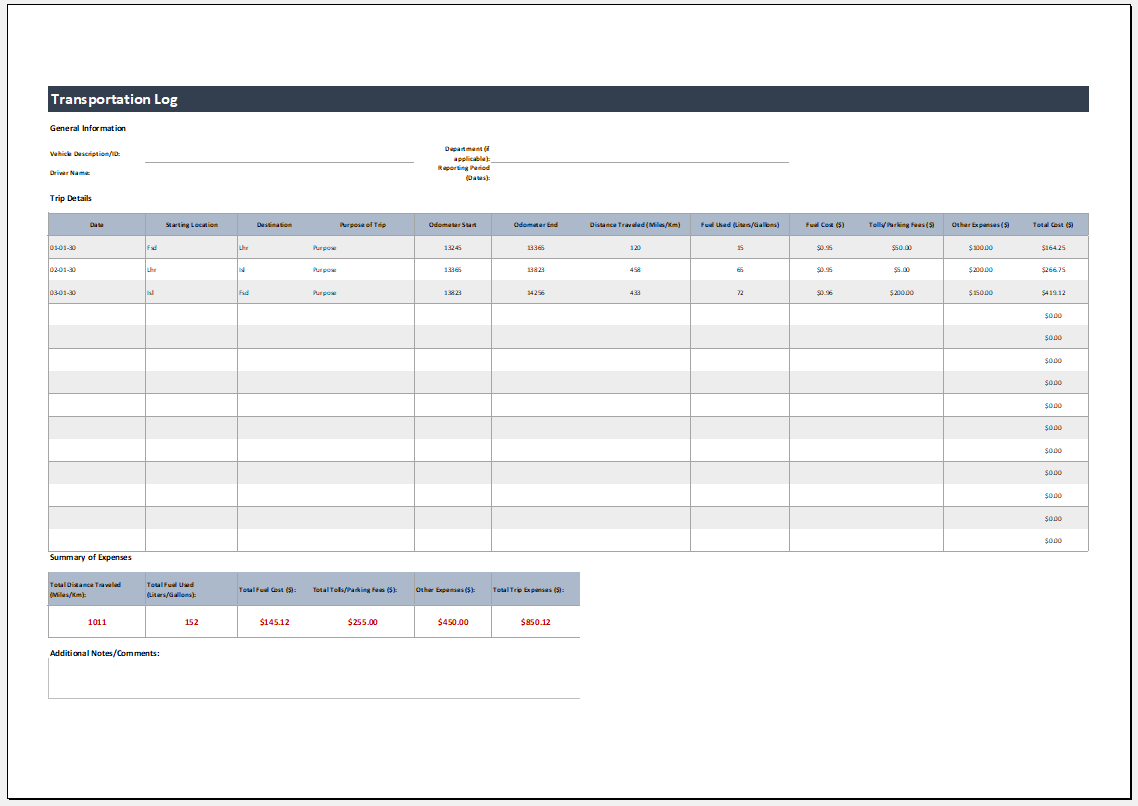
- Odometer readings (start and end)
- Departure and arrival times
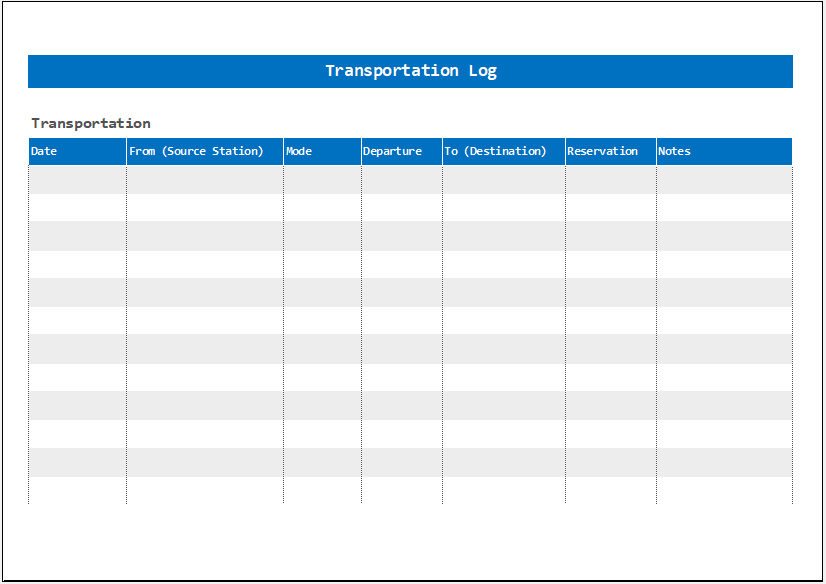
- Source and destination locations
3. Include Cargo or Passenger Details (If Applicable)
- List of goods being transported (if relevant)
- Name of sender and receiver (for deliveries)
- Number of passengers (for transport services)
4. Add Remarks or Comments Section
Provide space for:
- Notes about delays, issues, or observations
- Driver performance comments (optional)
5. Include Signatures
Add fields for:
- Driver’s signature
- Supervisor or authorized staff signature
- Date of sign-off
Conclusion
A transportation log template is an essential tool for maintaining efficiency, safety, and organization in transportation operations. Whether used by schools, logistics companies, or businesses, it ensures that all transportation activities are properly recorded and easily accessible when needed.
Here are the templates.
- Children’s Daily Activity Reward Sheet
- Winter Clothing & Gear Budget Sheet
- Winter Utility Expense Template
- Fuel & Equipment Sheets
- Monthly Attendance Sheet for Employees
- Student Entry & Exit Log
- Gantt Chart for Smaller Projects
- Behavior Log of Child for Schools
- Loan Repayment Tracker
- Product Sales Tracker Template
- Debit Memo Template for Excel
- Winter Attire Inventory
- Financial Projections Worksheet
- Employee Absence Tracker
- Weekly Sales Report Template
← Previous Article
Dispatcher Logbook TemplateNext Article →
Travel Log Template