Construction Site Checklist Template
Professionals working on a construction site must manage many tasks and details simultaneously. Since human memory has its limitations, relying on it can lead to missed steps or errors. To stay organized and efficient, most professionals use a construction site checklist, which helps ensure that nothing important is overlooked.
What is a Construction Site Checklist?
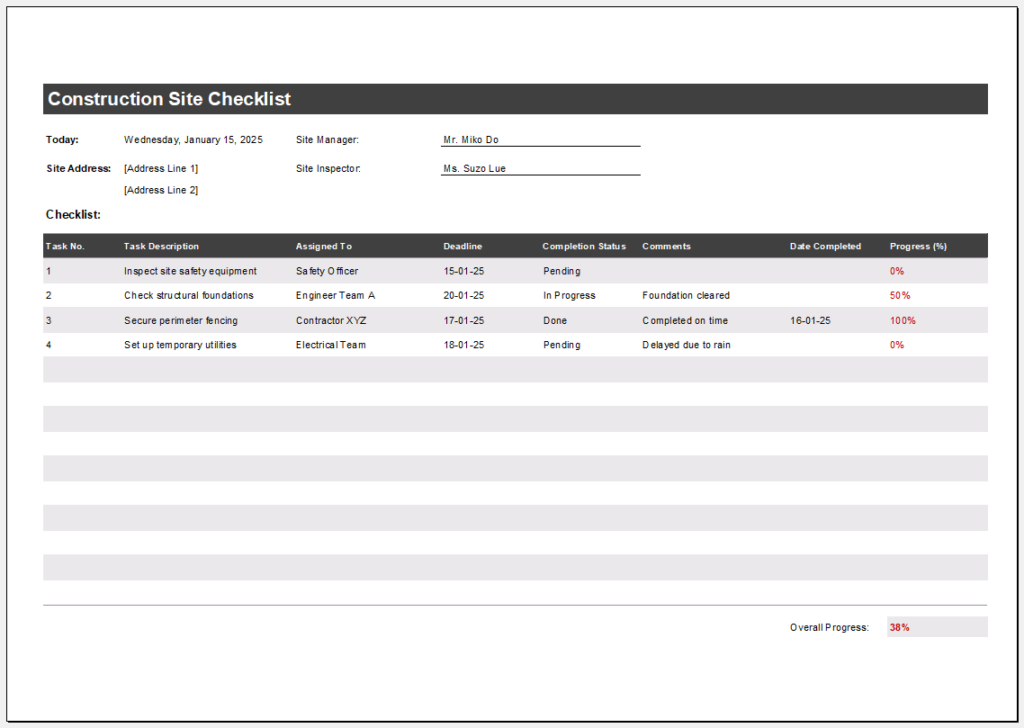
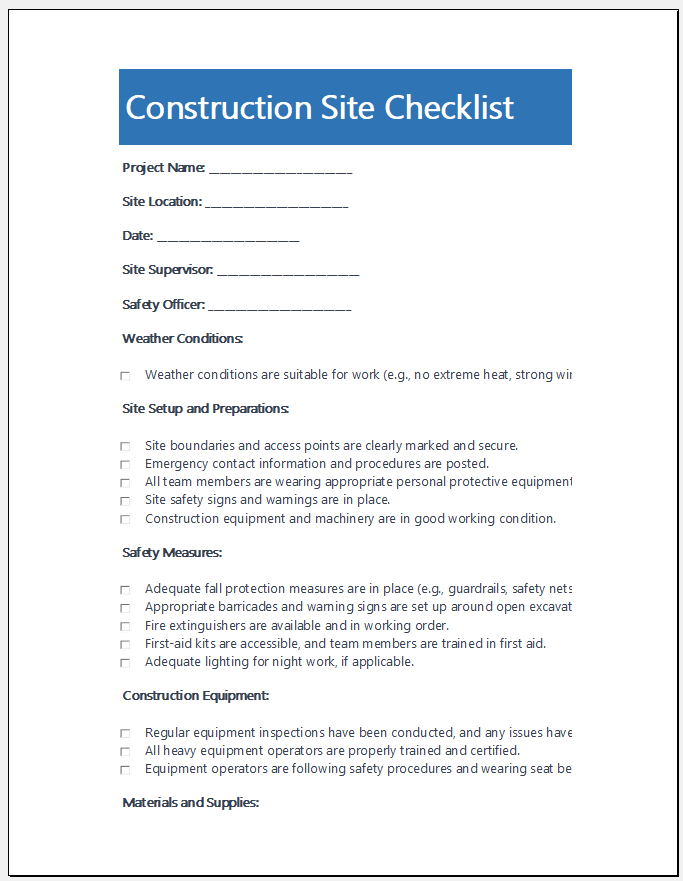
A construction site checklist is a document used by professionals to inspect, monitor, and manage activities on a construction site. It helps ensure that all operations are carried out safely, efficiently, and in compliance with required standards.
The checklist is especially useful for supervisors, engineers, and project managers who are responsible for maintaining a safe and well-organized work environment. When a site is properly managed, workers feel more secure, which ultimately improves productivity and performance.
Purpose of a Construction Site Checklist
The primary purpose of a construction site checklist is to identify, track, and manage tasks and potential issues on-site.
Construction professionals continuously observe site conditions to detect areas that require attention or improvement. Since it is easy to forget critical aspects of a project, a checklist serves as a reliable reminder of all essential tasks.
It is important to note that:
- The checklist may vary from project to project
- Its complexity depends on the size and nature of the construction work
Some projects may require a simple checklist, while others may need a detailed and comprehensive one.
Key Elements of a Construction Site Checklist
Compliance and Safety Details
A construction site must be safe for all workers and visitors. This section ensures that the site complies with safety regulations by including:
- Proper warning signs and notices
- Installation of barriers and fencing
- Controlled access to restricted areas
- General safety practices and precautions
Machinery and Equipment Details
Construction projects rely heavily on machinery and tools. This section covers:
- Availability of required equipment
- Proper working condition of machines
- Maintenance and inspection records
- Necessary licenses and permits
List of Operations
This section outlines all tasks and activities being carried out on-site, such as:
- Ongoing and upcoming work
- Material handling and storage
- Step-by-step sequence of operations
It helps ensure that tasks are completed in an organized and systematic manner.
Emergency Procedures
Emergencies such as accidents or injuries can occur at any time. This section includes:
- First aid procedures
- Emergency contact information
- Evacuation plans
- Steps to handle different types of incidents
Having these procedures documented allows workers to respond quickly, even in the absence of supervisors.
Documentation Details
Proper documentation is essential for managing a construction project effectively. This section may include:
- Names and roles of workers and supervisors
- Assigned duties and responsibilities
- Budget timelines
- Project timelines
- Scope of work and progress records
Documentation ensures transparency and helps track all aspects of the project.
Conclusion
Using a construction site checklist is essential for maintaining safety, quality, and organization. It helps professionals stay on track, reduces the risk of errors, and ensures that all tasks are completed properly.
Additionally, a checklist makes it easier for project managers to demonstrate compliance with safety regulations and avoid penalties. By keeping all necessary information and tasks in one place, it enables teams to work more efficiently and remain prepared for any unexpected situation.
- Children’s Daily Activity Reward Sheet
- Winter Clothing & Gear Budget Sheet
- Winter Utility Expense Template
- Fuel & Equipment Sheets
- Monthly Attendance Sheet for Employees
- Student Entry & Exit Log
- Gantt Chart for Smaller Projects
- Behavior Log of Child for Schools
- Loan Repayment Tracker
- Product Sales Tracker Template
- Debit Memo Template for Excel
- Winter Attire Inventory
- Financial Projections Worksheet
- Employee Absence Tracker
- Weekly Sales Report Template
← Previous Article
Rental Inventory Checklist TemplateNext Article →
Project Completion Checklist