Material Quantity Record Sheet
All functions in an industry need to operate ideally. Everything must be analyzed carefully so that operations succeed. The material used in producing products needs to be properly audited. When this is not done, it can lead to errors and the production of low-quality products. A material quantity record sheet is helpful here.
What is a material quantity record sheet?
A Material Quantity Record Sheet is a worksheet document used in industries, construction, and manufacturing to record and monitor the quantity of raw materials used, issued, received, and remaining in stock during a specific project or production process.
The worksheet helps managers and supervisors keep track of material consumption so they can ensure proper planning, avoid wastage, and maintain cost control. The sheet usually includes details such as material name, unit of measurement, opening balance, quantity received, quantity issued/used, and closing balance.
Importance of a material quantity record sheet
A Material Quantity Record Sheet is important because it helps track how much material is used, received, and remaining in a project or production process. It ensures proper control of resources, reduce waste, and prevents shortages or overstocking. It also supports accurate costing, better planning, and smooth workflow by keeping all material data organized in one place.
Creating a Material Quantity Record Sheet:
When making a material quantity record sheet, it is essential to do it carefully to avoid errors. The following tips can be kept in mind:
Microsoft Excel:
It is important to select an application to create the sheet. You must choose the right one if you want it to save and calculate everything accurately. Microsoft Excel is a good option here. Tables can be made, and calculations can be performed quickly.
Heading:
The sheet should be professional and formal. It should be created with this point in mind. A heading should be included, such as “Material Quantity List” or something similar. The heading helps everyone understand what the document is about.
Table:
You will create a table in the application. If proper headings are used, a table is easy to fill and simple to read. Ensure that whoever needs to fill or read it does not find the task difficult.
Item name:
The first column will be for the item name. It should be clear and include only the name of the item.
Description:
It is a good idea to add a description column. Here, the person filling the table will provide a brief explanation, helping everyone understand what the material is and its purpose. Keep it short. You can also include product ID, name, description, and category in separate columns if needed.
Quantity:
This column will show the quantity of the material. Only the quantity should be mentioned here without any description.
Unit cost:
Include the cost of a single unit of material. This will help management calculate the total cost required to produce the product.
Total:
It is important to show the total cost of each type of material. One needs to know the expected amount. You can also include a column that shows where the material should be purchased from. This will make it easier for procurement staff to source materials.
Prepared by:
At the bottom, mention who prepared the table. This information is necessary when records are checked, and management also requires it.
Signed by:
A signature gives any document authenticity. It confirms that everything stated above is correct, and the signer can be contacted if any issue occurs later.
All items:
The table should include all materials required to produce a single product. It is better to create a separate sheet for each item being produced. This will be more useful for everyone.
Draft it carefully
The worksheet should be prepared with care and clarity. It must be simple to complete and easy to understand for everyone involved in the business process. The sheet can be maintained as an official record and should always be filled out accurately.
Any mistakes can lead to errors that may impact production and place responsibility on the concerned staff. Therefore, the above points should be carefully considered when preparing the sheet.
Our Template
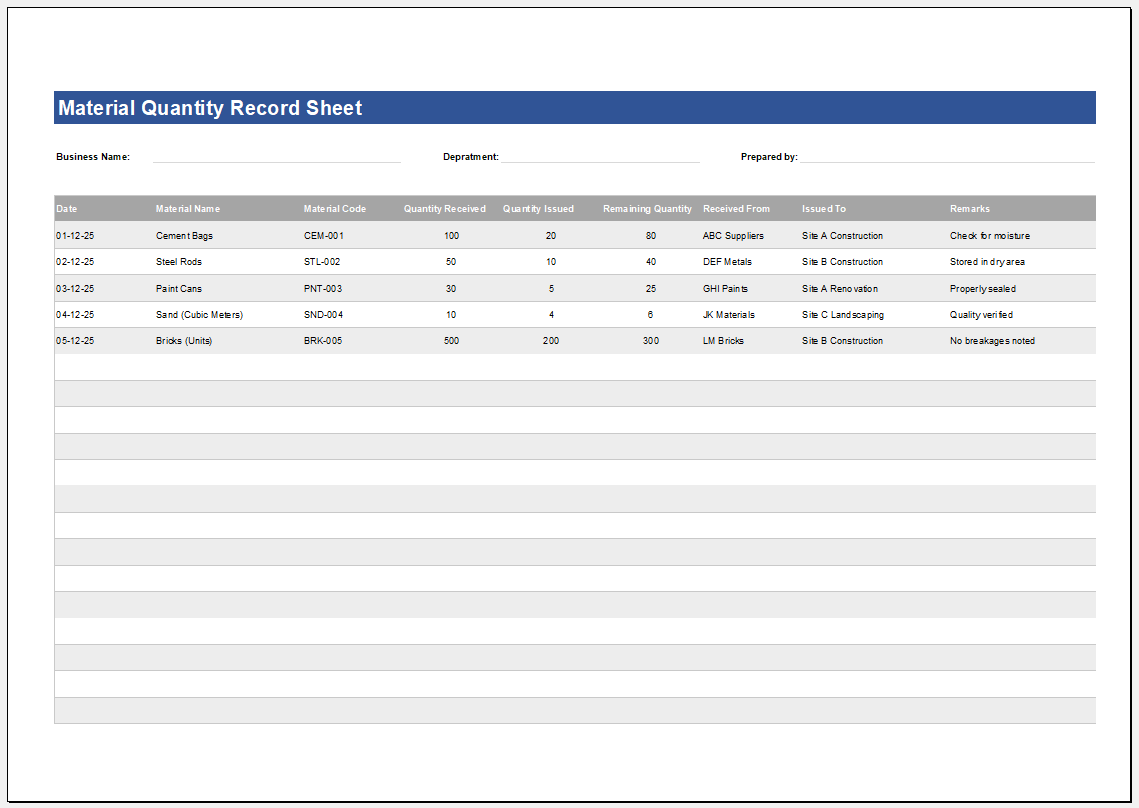
This Material Quantity Record Sheet is an Excel template used to track the movement and balance of materials in a business or construction project. At the top of the sheet, basic details such as the business name, department, and the person who prepared the record are entered to ensure proper identification and accountability. The main table records all material-related activities in an organized way. It includes the date of transaction, material name, and a unique material code for easy tracking. It also records the quantity received, quantity issued, and automatically helps determine the remaining quantity in stock.
Additional columns such as “Received From” and “Issued To” help identify suppliers and usage locations, while the remarks section is used to note material condition or other important details. Overall, this template helps businesses monitor inventory accurately, control material usage, reduce wastage, and maintain clear and reliable records for auditing and decision-making.
(Preview)
- Children’s Daily Activity Reward Sheet
- Winter Clothing & Gear Budget Sheet
- Winter Utility Expense Template
- Fuel & Equipment Sheets
- Monthly Attendance Sheet for Employees
- Student Entry & Exit Log
- Gantt Chart for Smaller Projects
- Behavior Log of Child for Schools
- Loan Repayment Tracker
- Product Sales Tracker Template
- Debit Memo Template for Excel
- Winter Attire Inventory
- Financial Projections Worksheet
- Employee Absence Tracker
- Weekly Sales Report Template
← Previous Article
Weekly Appointment Sheet TemplateNext Article →
Office Expense Budget Worksheet