Life Insurance Needs Calculator
Planning for the financial security of your loved ones is one of the most important responsibilities you can undertake. Choosing the right life insurance policy allows you to build a reliable financial safety net for your family. In the event of an untimely death, a well-planned life insurance policy ensures that your family’s financial needs are met and their future remains stable.
Importance of Choosing the Right Coverage Amount
When purchasing a life insurance policy, one of the most critical decisions is determining the appropriate coverage amount. It is essential to ensure that your family remains financially protected if anything happens to you. Life insurance is designed to provide your dependents with sufficient funds to cover daily expenses, future obligations, and maintain their standard of living. This brings peace of mind, knowing your loved ones will be financially secure.
Role of a Life Insurance Needs Calculator
A Life Insurance Needs Calculator is a practical and valuable tool that helps you estimate the amount of coverage required for your family’s financial security. It simplifies the planning process by providing a clear estimate, enabling you to make informed and confident decisions.
Before understanding how the calculator works, it is important to first grasp its purpose and how it fits into your overall financial planning strategy. Many individuals struggle to estimate the right amount of life insurance coverage due to the complexity of future financial needs and uncertainties. This is where a structured tool becomes highly useful, as it simplifies the process and provides a clear starting point for making informed decisions.
What is a Life Insurance Needs Calculator?
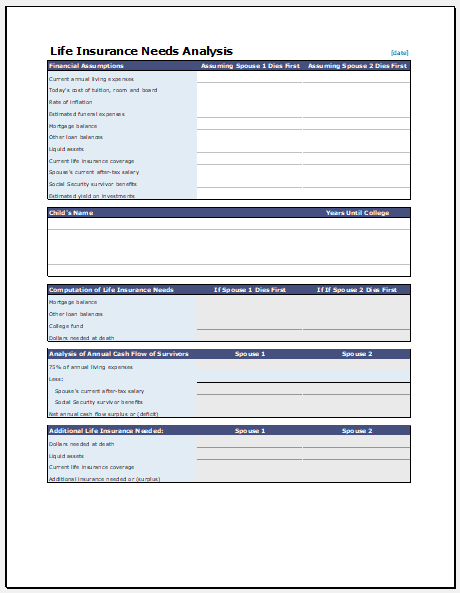
A Life Insurance Needs Calculator is a structured tool (often available as an Excel template or online form) that helps individuals determine the amount of life insurance coverage they need to adequately protect their dependents.
What Does the Calculator Include?
The calculator gathers essential financial information and automatically performs calculations using pre-defined formulas. By entering accurate details, users can quickly estimate their life insurance requirements without complex manual calculations.
To generate an accurate estimate, the calculator relies on specific financial details provided by the user. These inputs form the foundation of the entire calculation process, as even small inaccuracies can significantly impact the final result. By carefully entering complete and realistic information, users can ensure that the estimated life insurance coverage truly reflects their financial responsibilities and future needs.
Key Inputs Required in the Calculator
To generate an accurate estimate, the template typically requires the following information:
- Estimated burial or final expenses
- Number of years for income replacement
- Annual income required by dependents
- Number of dependents or beneficiaries
- Current savings and cash reserves
- Existing investments
- Current life insurance coverage (if any)
- Additional expenses to be covered (education, debts, etc.)
How the Calculator Works
Once all required fields are completed, the calculator automatically processes the data and provides an estimated coverage amount. This eliminates guesswork and ensures a more accurate financial plan.
It typically calculates your total financial obligations, such as outstanding debts, future expenses, and income replacement needs -and then subtracts any existing assets, savings, or current insurance coverage. The result is a clear estimate of the coverage gap that needs to be filled through a life insurance policy. This systematic approach ensures that all important financial aspects are considered, helping you arrive at a well-informed and realistic coverage amount tailored to your specific situation.
Why Use a Life Insurance Needs Calculator?
Many people find it difficult to manually estimate their life insurance needs, and some rely on insurance agents for assistance, which may involve additional costs. However, with a well-designed calculator template, you can independently and efficiently determine your coverage requirements.
Important Note
The Life Insurance Needs Calculator is designed for individuals who are planning to purchase a new policy and want to estimate the appropriate coverage amount. It is not intended for evaluating existing policies. For the most accurate results, always ensure that the information entered is complete and accurate.
Template Preview
A sample Life Insurance Needs Calculator template is provided below for your reference and use.
Preview
Format: MS Excel [.xlsx]
File Size: 56 KB
- Children’s Daily Activity Reward Sheet
- Winter Clothing & Gear Budget Sheet
- Winter Utility Expense Template
- Fuel & Equipment Sheets
- Monthly Attendance Sheet for Employees
- Student Entry & Exit Log
- Gantt Chart for Smaller Projects
- Behavior Log of Child for Schools
- Loan Repayment Tracker
- Product Sales Tracker Template
- Debit Memo Template for Excel
- Winter Attire Inventory
- Financial Projections Worksheet
- Employee Absence Tracker
- Weekly Sales Report Template
- Budget Vs Actual Statement
- Remote Work Attendance Tracker Template
- Mileage Expense Report Template
← Previous Article
Deferred Tax Rate CalculatorNext Article →
IRR (internal rate of return) Calculator