Inventory Control Sheet
Inventory control is the process through which a business monitors, manages, and regulates its stock levels. It ensures that the right quantity of items is available at the right time. The condition of inventory often reflects the overall financial health and efficiency of a business.
Effective inventory management is a crucial part of running any successful business. It ensures that stock levels are carefully monitored so that products are always available when needed, without tying up unnecessary capital in excess inventory. Proper control of inventory not only supports day-to-day operations but also helps businesses respond quickly to changes in demand, reduce wastage, and maintain a balanced flow of goods throughout the supply chain.
Objectives of Inventory Control
The main objective of inventory control is to maximize profit while minimizing investment in stock. A well-managed inventory system helps a business:
- Reduce unnecessary storage costs
- Avoid shortages and overstocking
- Improve customer satisfaction by ensuring product availability
- Maintain smooth operations and timely supply of goods
- Keep accurate information about where and how stock is stored and accessed
Importance of Inventory in a Business
Inventory is essential for any organization because it directly supports sales and operations. It ensures that products are available for customers and that empty shelves can be refilled quickly. Without proper inventory management, a business may face delays, loss of sales, or even operational failure.
Purpose of an Inventory Control Sheet
To effectively manage inventory, businesses use an inventory control sheet. It is a structured document (usually in Excel or register form) used to record and track all stock-related details. It helps managers and staff maintain full visibility of inventory movement and current stock levels.
Key Functions and Benefits
An inventory control sheet provides several important benefits:
- Ensures the correct quantity of products is maintained in stock
- Helps in tracking purchase costs and stock valuation
- Assists in determining the right time to reorder items
- Improves decision-making regarding purchasing and storage
- Ensures stock is available where and when it is needed
Challenges in Inventory Management
Managing inventory is not always simple. One of the biggest challenges businesses face is deciding the correct quantity to order. Overstocking can lead to wasted money and product obsolescence, while understocking can result in lost sales and dissatisfied customers.
Structure of an Inventory Control Sheet
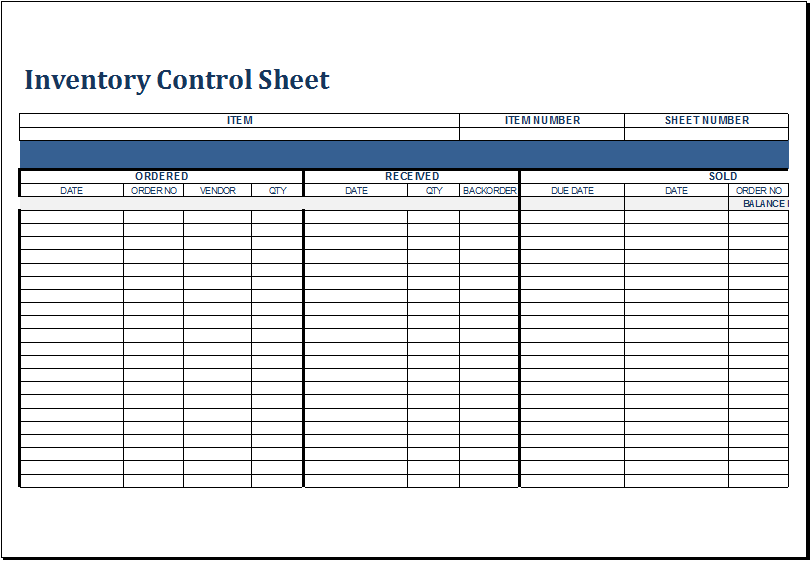
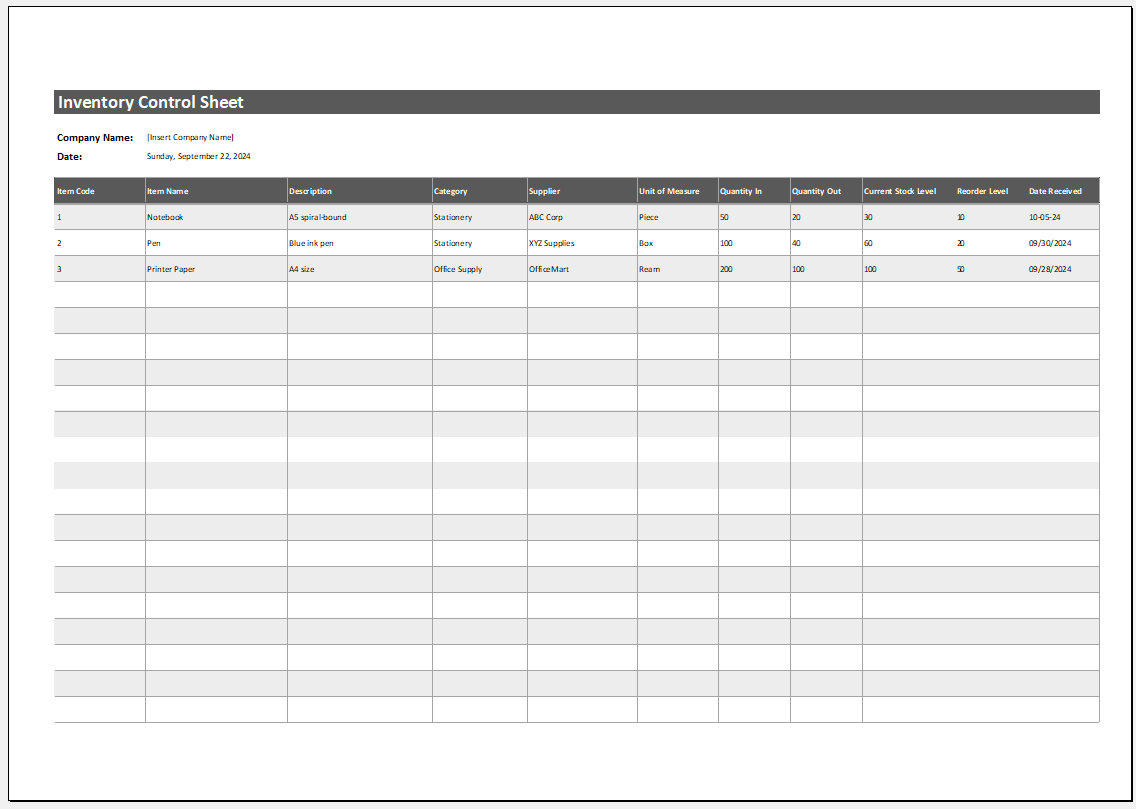
An inventory control sheet typically includes organized rows and columns that store important product information, such as:
- Product name and code
- Quantity in stock
- Items received and issued
- Unit price and total value
- Demand level
- Reorder level and restocking date
Maintenance and Usage
The inventory control sheet is usually maintained by an inventory controller or manager. It is updated regularly, often daily or weekly, and shared with management to support important purchasing and operational decisions. To ensure consistency and efficiency, most businesses use ready-made templates instead of creating new sheets each time.
Conclusion
In summary, an inventory control sheet is an essential tool for any business that deals with physical stock. It ensures accurate tracking, better planning, and efficient use of resources, ultimately helping the organization operate smoothly and profitably.
To make this process easier for you, we have created a ready-to-use inventory control template that you can download and use for free. This template is designed to help you manage your stock efficiently, save time, and maintain accurate records without the need to build a system from scratch.
Preview
Download your file below.
- Children’s Daily Activity Reward Sheet
- Winter Clothing & Gear Budget Sheet
- Winter Utility Expense Template
- Fuel & Equipment Sheets
- Monthly Attendance Sheet for Employees
- Student Entry & Exit Log
- Gantt Chart for Smaller Projects
- Behavior Log of Child for Schools
- Loan Repayment Tracker
- Product Sales Tracker Template
- Debit Memo Template for Excel
- Winter Attire Inventory
- Financial Projections Worksheet
- Employee Absence Tracker
- Weekly Sales Report Template
← Previous Article
Liquor Inventory SheetNext Article →
Building Maintenance Checklist
Leave a Reply