Comic Book Inventory Template
Comic books are a favorite pastime for many, and for dedicated enthusiasts, collecting them becomes a serious hobby. As collections grow, managing them efficiently becomes essential.
A comic book inventory template provides a structured way to organize and track each comic in one place. It allows collectors to record important details such as titles, issue numbers, conditions, and storage locations. Retailers dealing in comic books also rely on inventory templates to categorize and manage their stock systematically.
Using a comic book inventory template makes it easy to quickly locate a specific issue without searching through the entire collection, saving time and improving organization.
Organize Your Comics
A comic book inventory template is an essential tool for anyone who loves collecting comics or manages a comic book store. If you have a large collection, it helps you organize and track all your comic books efficiently. Instead of wasting time searching through piles of comics, you can quickly locate any isuse whenever needed.
Simplifying Comic Book Management
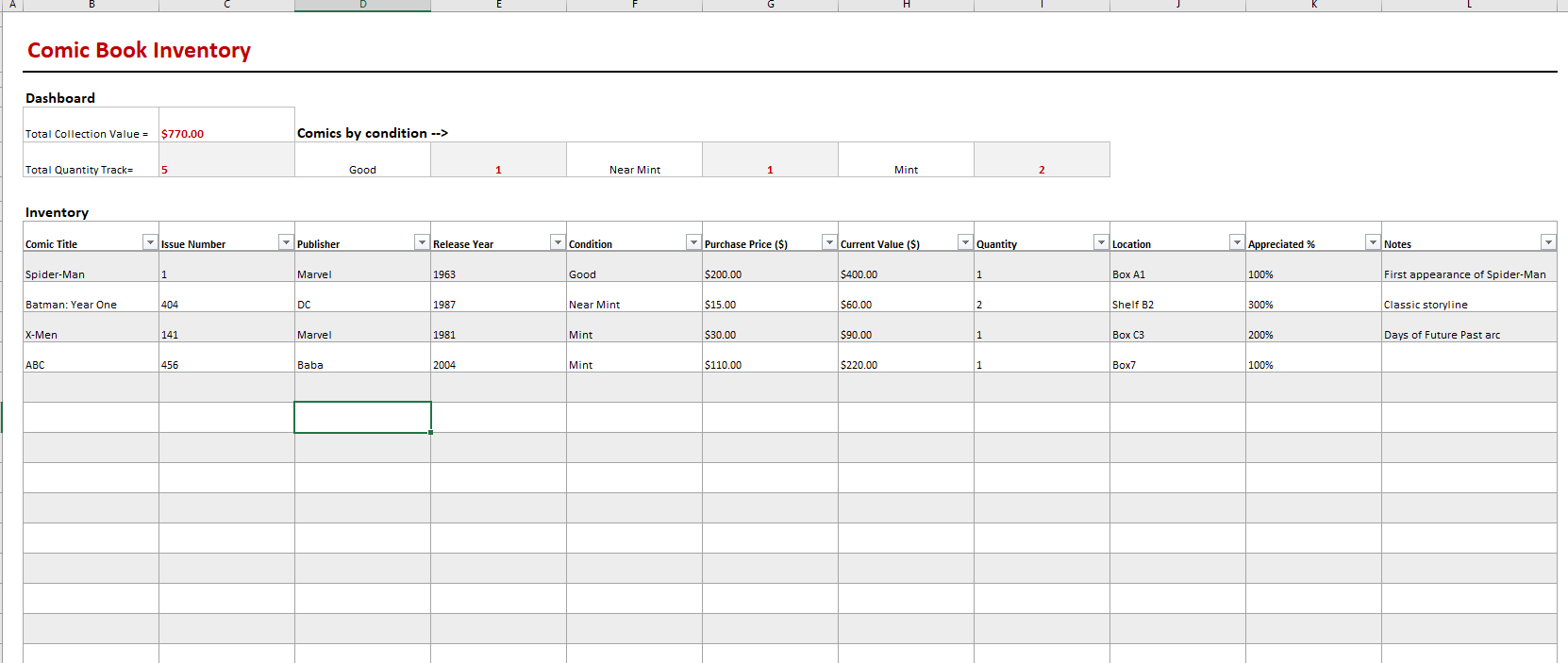
The template simplifies your work by providing a pre-designed sheet with structured columns. It typically includes fields such as title, issue number, publisher, condition, and storage location. You can organize your collection in different ways, alphabetically by title, by publisher, or even by category or theme.
For example, you can group comics by superhero series like Spider-Man or Batman, or categorize them into genres such as superhero, humor (like Archie comics), or special edition. This organized approach makes managing, tracking, and accessing your comic collection much easier and more efficient.
Manage Your Comic Collection like a Pro
A comic book inventory template helps you stay organized and manage your collection more efficiently over time. By maintaining a clear inventory list, you can avoid purchasing duplicate comic book issue -a common problem for collectors who don’t keep their collections properly documented.
Additionally, if you run a small comic book shop, the template allows you to quickly check stock availability. When a customer asks for a specific comic, you can simply refer to your inventory to see whether it’s in stock, saving time and improving customer service.
Benefits of Using an Inventory Template
The template is a handy tool that helps users efficiently organize their comic book collections. It is especially useful because it is a ready-made spreadsheet with rows and columns designed to record important details such as title, issue number, publisher, condition, and value. The template’s structured format guides users on how to enter and manage their collection. It allows collectors to arrange their comics in an organized sequence, making it easier to track, sort, and reference individual books.
How Do One Create a Comic Book Inventory?
Creating a comic book inventory helps you organize, track, and manage your collection efficiently. A well-structured inventory allows you to quickly locate any comic, track its value, and avoid duplicates. A simple inventory template usually contains four main columns, each collecting a different type of information about the comic book:
- Title -The first column is used to enter the comic book’s title. This is the most important information in your inventory, as it identifies each book in your collection. Be sure to include the full series name and, if needed, the issue number.
- Location -The second column records the exact location of the comic. If you store comics on bookshelves with multiple boxes, assign a unique identifier to each box or shelf. This way, each book has a specific “address,” making it easier to find when needed.
- Quantity -The third column shows how many copies of a particular comic you own. This helps prevent accidental duplicates and makes it easy to track your collection size.
- Notes/Comments -The fourth column is used for additional information, such as retailer comments, special editions, condition, or any reminders. You can include details like first appearances, signed copies, or upcoming market value considerations.
Optional Additional Columns
For a more detailed inventory, one can add extra columns such as:
- Publisher -To track the company that published the comic.
- Publication Date -Month and year of release.
- Condition/Grade -Such as Mint, Near Mint, Fine, etc.
- Purchase Price -What you paid for the comic.
- Current Value -Estimated market value for collectors or resale.
If you don’t want to create a comic book inventory sheet from scratch, you can download our ready-made template designed specifically for collectors and hobbyists. Our template includes all the key features mentioned above.
Whether you are a casual collector or a serious investor, this template will help you organize your comics, track their value, and keep your collection in order. We hope it makes managing your comic book collection simple and enjoyable.
The sheet allows organizing details about comic books, their conditions, and associated values.
File: Excel (.xlsx) 2007/10 Size 28 Kb
- Children’s Daily Activity Reward Sheet
- Winter Clothing & Gear Budget Sheet
- Winter Utility Expense Template
- Fuel & Equipment Sheets
- Monthly Attendance Sheet for Employees
- Student Entry & Exit Log
- Gantt Chart for Smaller Projects
- Behavior Log of Child for Schools
- Loan Repayment Tracker
- Product Sales Tracker Template
- Debit Memo Template for Excel
- Winter Attire Inventory
- Financial Projections Worksheet
- Employee Absence Tracker
- Weekly Sales Report Template
← Previous Article
Book Inventory TemplateNext Article →
Livestock Inventory Template