Project Completion Checklist
Successfully completing a project requires careful planning, effective resource management, and continuous monitoring of progress. Regardless of the project’s size or industry, ensuring that every task is completed according to requirements is essential for achieving the desired results. Organizations that consistently deliver projects on time build stronger relationships with clients, improve their reputation, and increase opportunities for future business.
Managing multiple project activities can be challenging, especially when deadlines are tight and several team members are involved. Even a small overlooked task can lead to delays, increased costs, or client dissatisfaction. For this reason, project managers often rely on structured tools to keep projects organized and on track. One of the most effective tools for this purpose is a Project Completion Checklist.
A Project Completion Checklist provides a systematic approach to reviewing all project requirements before final delivery. It helps teams verify that every task has been completed, every requirement has been fulfilled, and all project objectives have been achieved.
What Is a Project Completion Checklist?
A Project Completion Checklist is a structured document used to monitor and verify the completion of all project activities before a project is officially closed. It serves as a final review tool that helps project managers and team members ensure that all deliverables have been completed according to the agreed specifications.
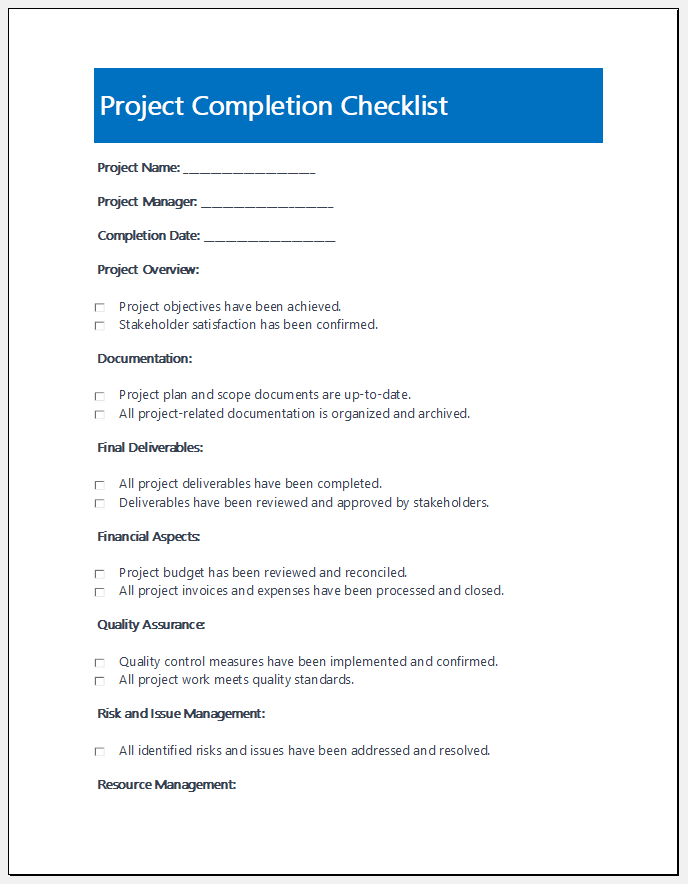
The checklist typically includes project milestones, pending tasks, approvals, documentation requirements, quality assurance checks, compliance requirements, and client deliverables. By reviewing the checklist before project closure, organizations can identify any missing items and address them before submitting the final project to the client.
Since every project has unique goals, timelines, and requirements, no two project completion checklists are exactly the same. The contents of the checklist are usually customized according to the nature and complexity of the project.
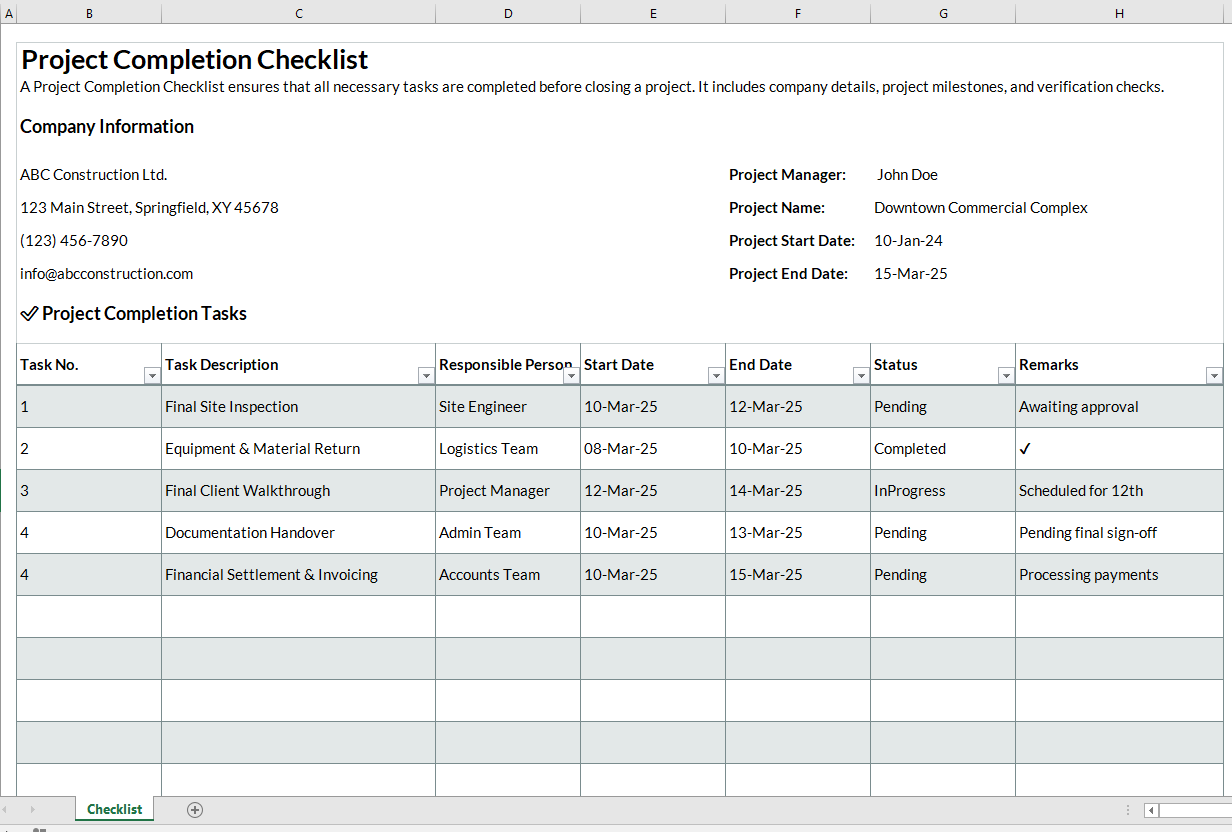
Following is a sample template prepared by our professionals.
Advantages of Using a Project Completion Checklist
A Project Completion Checklist offers numerous benefits that contribute to the successful delivery of a project. Some of the major advantages are discussed below.
Ensures Timely Project Completion
One of the most important indicators of project success is meeting the agreed deadline. Delayed project delivery can negatively impact client satisfaction and may damage a company’s reputation.
A project completion checklist helps team members stay focused on their responsibilities by clearly outlining the remaining tasks and deadlines. As tasks are completed and marked off, the team gains a clear understanding of project progress. This organized approach reduces the risk of missed deadlines and increases the likelihood of delivering the project on time.
Keeps the Project Aligned with Client Objectives
Every project is initiated with specific goals and expectations established by the client. Meeting these objectives is essential for project success.
A project completion checklist serves as a reference point throughout the project review process. By comparing completed work against the listed objectives, project teams can verify that all client requirements have been addressed. This helps ensure that the final deliverables meet expectations and minimizes the need for revisions or corrections after submission.
Helps Maintain Compliance Requirements
Many projects must comply with industry standards, legal regulations, contractual obligations, and internal company policies. Failure to meet these requirements can result in delays, penalties, or rejection of the project.
A project completion checklist allows the team to verify compliance before final approval. It provides a convenient method for tracking regulatory requirements and confirming that all necessary standards have been met before project closure.
Improves Quality Control
Quality assurance is a critical part of any successful project. A checklist helps teams conduct final inspections and reviews to ensure that work meets the required quality standards.
By systematically reviewing deliverables, documentation, and completed tasks, organizations can identify errors, inconsistencies, or missing components before the project is delivered to the client.
Enhances Team Accountability
When tasks are clearly listed and assigned, team members become more accountable for their responsibilities. A project completion checklist creates transparency by showing which activities have been completed and which still require attention. This improves coordination among team members and reduces confusion during the final stages of the project.
How to Create a Project Completion Checklist
Because every project is different, the checklist should be tailored to the specific needs of the project. The following steps can help you create an effective project completion checklist.
Understand the Project Requirements
Before creating the checklist, develop a complete understanding of the project’s objectives, deliverables, timeline, and client expectations. The better you understand the project, the more comprehensive and useful your checklist will be.
Evaluate Available Resources
Consider all available resources, including budget, personnel, equipment, materials, and time constraints. Understanding these factors helps ensure that the tasks included in the checklist are realistic and achievable.
Divide the Project into Phases
Large projects become easier to manage when divided into smaller phases and tasks. Break the project into manageable sections and identify the activities required to complete each phase. Include these tasks in the checklist to make progress tracking more efficient.
Include Review and Approval Steps
In addition to project tasks, include checkpoints for quality reviews, management approvals, client sign-offs, and documentation verification. These steps help ensure that nothing is overlooked before project completion.
Perform a Final Verification
Before officially closing the project, review the entire checklist and confirm that every item has been completed. This final verification helps eliminate outstanding issues and ensures a smooth project handover.
A well-designed Project Completion Checklist is an invaluable tool for project managers and teams. It improves organization, enhances accountability, supports compliance, and helps ensure that projects are delivered on time and according to client expectations. By using a structured checklist, organizations can reduce errors, improve project outcomes, and maintain a high level of professionalism in every project they undertake.
About Our Project Completion Checklist Template
Our team has created a professional Project Completion Checklist Template for Excel to help project managers and teams organize, track, and verify all activities required before a project is officially closed.
The template includes a Project Information section where users can enter key details such as the project name, project manager, company information, and important dates. This ensures that all essential project information is recorded in one place.
The main checklist section allows users to track project completion tasks by recording the task description, responsible person, start date, end date, status, and remarks. This helps teams monitor progress and ensure that no important activity is overlooked.
A built-in completion percentage calculation automatically tracks overall project progress based on completed tasks. This provides a quick overview of project status and helps identify any remaining work.
The template also includes a final approval section where authorized personnel can provide signatures and approval dates, creating an official record that the project has been reviewed and completed successfully.
Because the template is fully editable in Excel, users can easily customize tasks, add additional checklist items, and adapt it to projects of any size. Overall, it helps improve organization, accountability, and project closure efficiency while ensuring all requirements are met before final delivery.
- Children’s Daily Activity Reward Sheet
- Winter Clothing & Gear Budget Sheet
- Winter Utility Expense Template
- Fuel & Equipment Sheets
- Monthly Attendance Sheet for Employees
- Student Entry & Exit Log
- Gantt Chart for Smaller Projects
- Behavior Log of Child for Schools
- Loan Repayment Tracker
- Product Sales Tracker Template
- Debit Memo Template for Excel
- Winter Attire Inventory
- Financial Projections Worksheet
- Employee Absence Tracker
- Weekly Sales Report Template
← Previous Article
Construction Site Checklist TemplateNext Article →
Salon Startup Checklist Template