Petty Cash Log for Small Business
Petty cash is a small amount of money that a business keeps on hand to handle minor and incidental expenses. It is usually stored securely, such as in a lockbox. Small businesses use petty cash for day-to-day expenses like office supplies, employee reimbursements, small purchases, and miscellaneous costs.
For any small business, managing cash efficiently is a key part of maintaining smooth daily operations. While major expenses are usually recorded through formal accounting systems, smaller day-to-day transactions can easily go unnoticed if not properly tracked. These minor expenses may seem insignificant individually, but over time they can add up and impact the overall financial health of the business. This is where a structured approach to handling and recording petty cash becomes essential.
Importance of Tracking Petty Cash
It is essential to keep track of petty cash to understand where the money is being spent and how much remains available. Proper tracking helps prevent misuse and ensures accurate financial management. A petty cash log plays a key role in maintaining this record.
Although petty cash is meant for small and routine expenses, it still represents business funds that require proper oversight. Without a clear system in place, it becomes difficult to track how the cash is being used or to verify transactions when needed. To ensure accountability and maintain accurate records, businesses rely on a simple yet effective tracking method that records every petty cash movement in an organized manner
What is a Petty Cash Log?
A petty cash log is a record that tracks all transactions related to a business’s petty cash fund. It includes details of small payments such as vendor purchases, employee reimbursements, and other minor expenses.
This log allows business owners to:
- Monitor when petty cash is used
- Understand the purpose of each transaction
- Track the amount spent
- Identify who received the cash
As a result, it supports better budgeting and financial control.
Before setting up a petty cash log, it is important to understand that its effectiveness depends on how clearly and consistently it is maintained. A well-structured log not only records transactions but also makes it easy to review and verify expenses whenever needed.
By organizing the log properly from the beginning, businesses can save time, reduce errors, and ensure that all petty cash activities are documented accurately.
How to Create an Effective Petty Cash Log
To maintain an accurate petty cash log, all transactions should be recorded promptly and clearly. Below are key elements and tips to consider:
1. Add a Clear Heading
Use a title such as “Petty Cash Log” at the top of the document. This makes it easy to identify and organize.
Include:
- Date From / Date To (to define the time period)
- Opening Balance (previous cash amount available)
2. Use a Tabular Format
A table format makes the log easy to read and manage. Common columns include:
- Date – When the transaction occurred
- Description – Details of the expense
- Voucher/Receipt No. – Reference for proof
- Cash In – Amount added to petty cash
- Cash Out – Amount spent
- Balance – Remaining cash after each transaction
At the bottom, include totals to summarize:
- Total cash received
- Total cash spent
- Closing balance
3. Include Authorization
Provide space for:
- Signature of the responsible person
- Date of approval
This ensures accountability and validates the record.
4. Use Petty Cash Wisely
Small businesses must carefully manage their cash to remain financially stable. Monitoring petty cash helps identify spending patterns and control unnecessary expenses.
Expenses commonly tracked include:
- Office supplies
- Food and refreshments
- Transportation
- Utility-related minor payments
By recording these details, businesses can ensure that sufficient petty cash is always available when needed.
5. Plan for Replenishment
A petty cash log helps business owners know when funds are running low. This allows timely replenishment and avoids disruptions in daily operations.
By maintaining a well-organized petty cash log, small businesses gain better visibility into their daily cash flow and spending habits. It not only helps in tracking minor expenses but also improves accountability and financial discipline within the organization. When used consistently, this simple record-keeping tool can contribute significantly to more informed decision-making and efficient cash management.
Conclusion
Maintaining a petty cash log is essential for small businesses to track minor expenses, control spending, and ensure transparency. With proper recording and monitoring, businesses can manage their funds more effectively and support long-term growth.
Preview
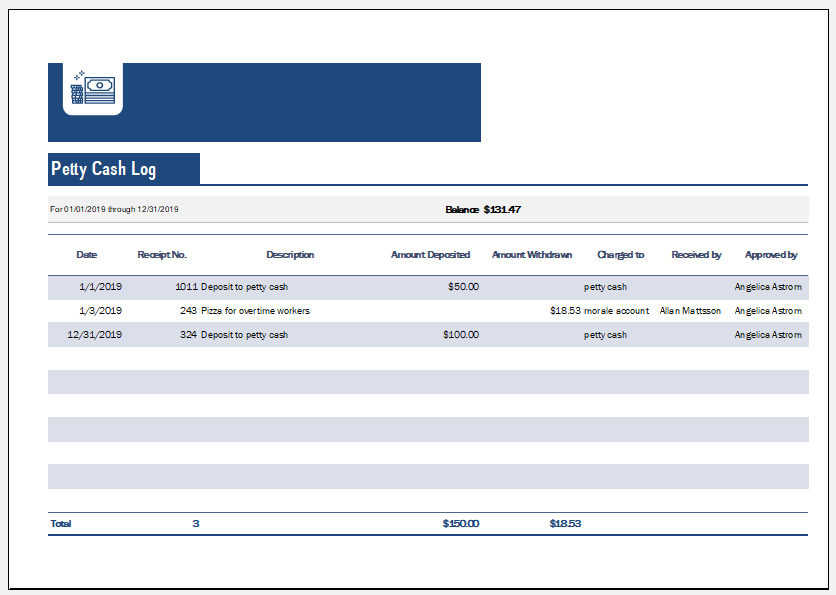
Format: MS Excel /File Size: 80 KB
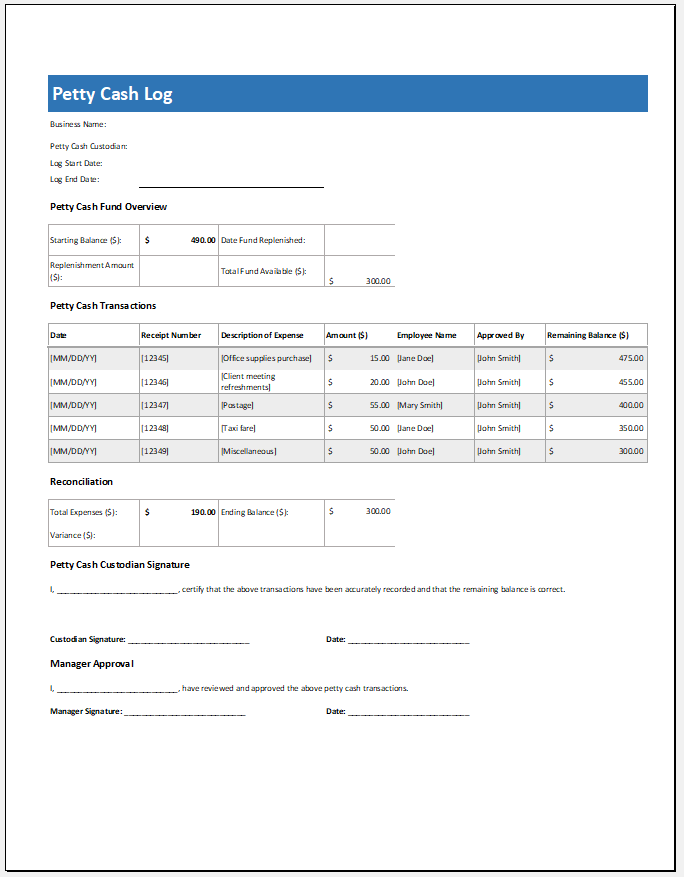
Format: MS Excel -File Size: 210 KB
- Children’s Daily Activity Reward Sheet
- Winter Clothing & Gear Budget Sheet
- Winter Utility Expense Template
- Fuel & Equipment Sheets
- Monthly Attendance Sheet for Employees
- Student Entry & Exit Log
- Gantt Chart for Smaller Projects
- Behavior Log of Child for Schools
- Loan Repayment Tracker
- Product Sales Tracker Template
- Debit Memo Template for Excel
- Winter Attire Inventory
- Financial Projections Worksheet
- Employee Absence Tracker
- Weekly Sales Report Template
← Previous Article
Sales Lead TrackerNext Article →
Quarterly Sales Report Template