Bill of Lading
For any organization, trade and business dealings with customers and clients are extremely important. These activities generate revenue and help build the organization’s reputation in the market. To operate successfully and remain competitive, organizations must follow certain policies, procedures, and commercial terms. These practices ensure smooth transactions and strengthen credibility in the trading environment. One essential document used in this process is the bill of lading, which serves as a key legal and logistical instrument in the shipment of goods.
A bill of lading is a legal document issued by a carrier to a shipper that governs the transportation of specific goods between them.
As international trade expanded, companies required a legal document to regulate the shipment of goods. A bill of lading is a legal document issued and signed by the carrier or shipping company. It serves as an acknowledgment that the goods have been received and provides details regarding their transportation to the specified destination.
A bill of lading is a document used for the transportation of goods worldwide and is commonly used by companies involved in shipping and delivering goods.
Information Included in a Bill of Lading
- The type and description of goods carried by the carrier on behalf of the shipper.
- The quantity or number of goods shipped.
- The destination and place of delivery of the goods.
- The terms and conditions governing the carriage of cargo.
- Proof that the goods have been received and loaded by the carrier.
A Bill of Lading is an important document issued before goods are handed over to the shipping company. It is duly signed by the authorized agents and serves as a receipt, a contract of carriage, and a document of title, ensuring the safe transfer of goods.
Both the sender (shipper) and the receiver (consignee) benefit from this document. It is widely used in international trade, where exporters receive payment, and importers receive the goods upon presentation of the document. Although minor delays in the transportation process may occur, the Bill of Lading helps ensure that shipments are properly tracked and delivered.
What types of goods are carried by the carrier on behalf of the shipper?
A bill of lading can be issued in the following forms:
On-board bill of lading:
This type confirms that the goods have been physically loaded onto the ship, aircraft, or other transport vehicle. It serves as proof that the shipment is on board and in transit.
Received-for-Shipment Bill of Lading:
This type indicates that the carrier has received the goods for shipment, but they have not yet been loaded onto the vessel or aircraft. It can be converted into an on-board bill of lading once the goods are loaded.
Uses of a bill of lading:
A bill of lading is a crucial document in imports and exports, playing a vital role in international trade and facilitating commerce across continents. Its benefits are significant:
- It serves as a receipt of goods, providing the shipper with proof that the carrier has received the merchandise for transportation.
- As a legal contract, it outlines the terms and conditions between the carrier and the consignee (receiver), ensuring clarity and accountability.
- It acts as a document of title, enabling the holder to claim the goods and providing security in case of disputes.
- In the event of loss or damage, the carrier may be held liable according to the terms stated in the bill of lading.
- It helps ensure the timely and proper delivery of goods to the designated destination.
Billing statements
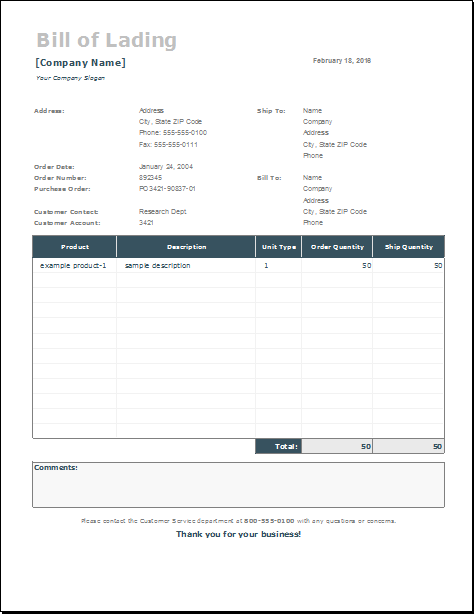
In a bill of lading, various details about the goods and their shipment are recorded, such as the type of goods, quantity, and the destination. Often, the bill of lading also serves as a receipt for the shipment and as proof of the carrier’s responsibility for the consignment.
About template
Because many organizations use bills of lading on a daily basis, they often create a bill of lading template to simplify the process. When preparing such a template, it is essential to include all important details related to the shipment and the consignment. These details typically include the name of the product, quantity, destination, shipper (sender), and consignee (receiver). Including these key pieces of information is crucial for accuracy and legal purposes.

File Size: 43 KB
File Size: 43 KB
- Children’s Daily Activity Reward Sheet
- Winter Clothing & Gear Budget Sheet
- Winter Utility Expense Template
- Fuel & Equipment Sheets
- Monthly Attendance Sheet for Employees
- Student Entry & Exit Log
- Gantt Chart for Smaller Projects
- Behavior Log of Child for Schools
- Loan Repayment Tracker
- Product Sales Tracker Template
- Debit Memo Template for Excel
- Winter Attire Inventory
- Financial Projections Worksheet
- Employee Absence Tracker
- Weekly Sales Report Template
← Previous Article
Monthly Billing Invoice StatementNext Article →
Employee Wages and Holiday Record
Leave a Reply