Cash Flow Statement Template
There are several ways a company can manage its finances to remain profitable. Careful financial management is essential for a business to continue functioning effectively. A cash flow statement is a key tool that provides insight into a company’s financial health.
Cash flow statements can be prepared on a daily, monthly, or annual basis. These statements are financial reports that show the cash a company generates and spends over a specific period, whether it is a day, a month, or a year.
Preparing cash flow statements regularly is important because it provides a clear picture of a business’s financial health and operational efficiency. The statement shows how effectively the company manages its cash, ensuring that debts are paid and operating costs are funded.
A cash flow statement details the expenses incurred and the income received during the period. By calculating these amounts, the company can determine its overall cash inflows and outflows, helping management make informed financial decisions.
Benefits and Limitations of a Cash Flow Statement
Benefits
A daily, monthly, or annual cash flow statement provides several advantages for a business:
- Understanding Cash Movement: It helps a company track where money is coming from and where it is going, giving an accurate view of the business’s financial health.
- Cash Management: The statement indicates periods when the company has excess cash or is short of funds, enabling better decision-making.
- Forecasting and Budgeting: It allows a company to predict future cash flows, which is valuable for budgeting and planning.
- Investor Insight: Investors can assess a company’s financial health by reviewing its cash flow statement.
- Monitoring Cash Activity: It provides a clear picture of both incoming and outgoing cash.
- Stakeholder Transparency: The statement shows the flow of cash among the company, its owners, and its creditors.
Limitations
Despite its usefulness, a cash flow statement has certain limitations:
- Limited Profitability Insight: Non-cash expenses (like depreciation) are not included, so it does not fully reflect a company’s profitability.
- Historical Focus: The statement is based on past transactions, which means it may not provide a complete picture for predicting future cash flows. To fully assess a company’s financial position, it must be used alongside other financial statements.
How to Prepare a Cash Flow Statement?
When creating a daily, monthly, or annual cash flow statement, it is important to follow a clear structure to ensure accuracy and usefulness. The following points will guide you:
Structure of the Cash Flow Statement
- Give the document a clear heading, such as “Cash Flow Statement”, and include the relevant year.
- Include the name, address, and contact details of the business.
- Include fields to record the manager’s name, the person preparing the statement, and the date of completion.
- Divide the statement into sections to organize different types of financial information.
Beginning Balance
- Start with a section that records the opening cash balance or cash on hand at the beginning of the period.
Cash Receipts
- Create a section for cash inflows.
- Include columns for different types of cash receipts, such as:
- Cash sales
- Tax refunds
- Interest income
- Include columns for each month (for monthly or annual statements).
- Calculate the total cash receipts at the bottom of this section.
Cash Payments and Expenses
- Create a section for cash outflows:
- Cost of goods sold (COGS)
- Operating expenses (e.g., rent, salaries, utilities)
- Additional expenses
- Include columns for each month and calculate the total cash payments.
- Determine the month-ending or period-ending cash balance by subtracting total payments from total receipts and adding the opening balance.
Keep It Clear
- Avoid including irrelevant details that may confuse the reader.
- Keep the layout organized, simple, and easy to follow.
A business should prepare daily, monthly, and annual cash flow statements, along with other financial documents, to effectively manage finances, plan for expenses, and track liquidity.
Preview of the Template
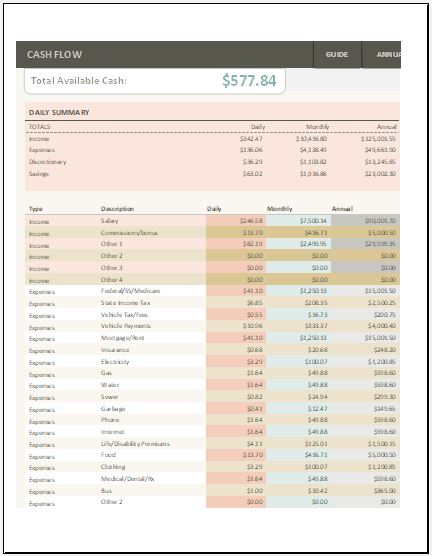
Microsoft Excel (.xlsx) File: 60 KB
- Children’s Daily Activity Reward Sheet
- Winter Clothing & Gear Budget Sheet
- Winter Utility Expense Template
- Fuel & Equipment Sheets
- Monthly Attendance Sheet for Employees
- Student Entry & Exit Log
- Gantt Chart for Smaller Projects
- Behavior Log of Child for Schools
- Loan Repayment Tracker
- Product Sales Tracker Template
- Debit Memo Template for Excel
- Winter Attire Inventory
- Financial Projections Worksheet
- Employee Absence Tracker
- Weekly Sales Report Template
← Previous Article
Home Construction Expense Calculator WorksheetNext Article →
Petty Cash Reconciliation Sheet
Leave a Reply