Work Breakdown Structure Template
Project managers must execute projects carefully and efficiently to ensure success. Projects often involve multiple complexities that need to be handled in a structured manner. To simplify project management and achieve desired results, various tools and methods are used. One of the most effective among them is the Work Breakdown Structure (WBS).
What is a Work Breakdown Structure Template?
A Work Breakdown Structure (WBS) template is a visual and organizational tool used in project management to divide a project into smaller, manageable components. It helps in planning, organizing, and tracking progress more effectively.
This structured breakdown allows teams to clearly understand the scope of work by dividing the project into tasks and sub-tasks. It also highlights the relationship between different components of the project.
Importance of a WBS Template
A WBS is essential because it breaks down the entire project into manageable parts. This makes it easier to:
- Organize tasks systematically
- Understand the full project scope
- Visualize all required activities
- Manage and control project execution effectively
Project managers can use a WBS to ensure that no critical task is overlooked.
Key Benefits of Using a WBS Template
A Work Breakdown Structure template offers several advantages:
- Better Task Management: Simplifies complex projects by dividing them into smaller parts
- Clear Responsibility Assignment: Helps assign tasks to team members efficiently
- Improved Cost Estimation: Assists in budgeting and cost allocation
- Enhanced Communication: Ensures everyone understands their roles and responsibilities
- Progress Tracking: Makes it easier to monitor project performance
- Risk Identification: Helps identify potential issues early
- Efficient Resource Allocation: Optimizes the use of available resources
Before diving into the challenges, it is important to recognize that a Work Breakdown Structure is most effective when it is thoughtfully designed and consistently maintained. While it offers clarity, structure, and better control over project activities, its success largely depends on how well it is implemented by the project team. Understanding both its strengths and limitations allows project managers to use this tool more effectively and avoid common pitfalls during project execution.
Challenges of Using a WBS Template
Despite its benefits, there are some challenges:
- Creating and maintaining a WBS can be time-consuming, especially for complex projects
- It may be difficult to capture every detail of the project scope
- Some team members may find it hard to understand initially
- Scope creep can occur if additional tasks are added after finalization
Before creating a Work Breakdown Structure, it is important to have a clear understanding of the project’s goals, scope, and expected outcomes. A well-prepared foundation ensures that the structure is logical, complete, and easy to follow. By approaching the process step by step, project managers can develop a WBS that accurately represents all necessary work and supports effective planning and execution.
How to Create a Work Breakdown Structure (WBS)
Follow these steps to create an effective WBS:
1. Define Scope and Objectives
Clearly outline the project’s goals and overall purpose. For example, the objective could be building a house or organizing an event.
2. Identify Phases and Deliverables
Break the project into major phases or deliverables. Focus on outcomes rather than listing every minor activity.
3. Develop Work Packages
Divide each deliverable into smaller tasks and sub-tasks. These are called work packages, which represent the lowest level of the WBS. Each work package should include:
- Task description
- Assigned person
- Estimated duration
- Cost
To ensure that your Work Breakdown Structure is effective and easy to use, it is important to follow certain guidelines. Applying proven practices helps maintain clarity, consistency, and accuracy throughout the project.
Best Practices for Creating a WBS
By following these best practices, you can create a WBS that is well-structured, easy to understand, and highly effective in supporting successful project planning and execution.
- Keep the structure simple and easy to understand
- Avoid unnecessary details and distractions
- Ensure all required work is included
- Do not include unrelated tasks
- Maintain clarity for the entire project team
How to Format a WBS Template (Excel or Sheet)
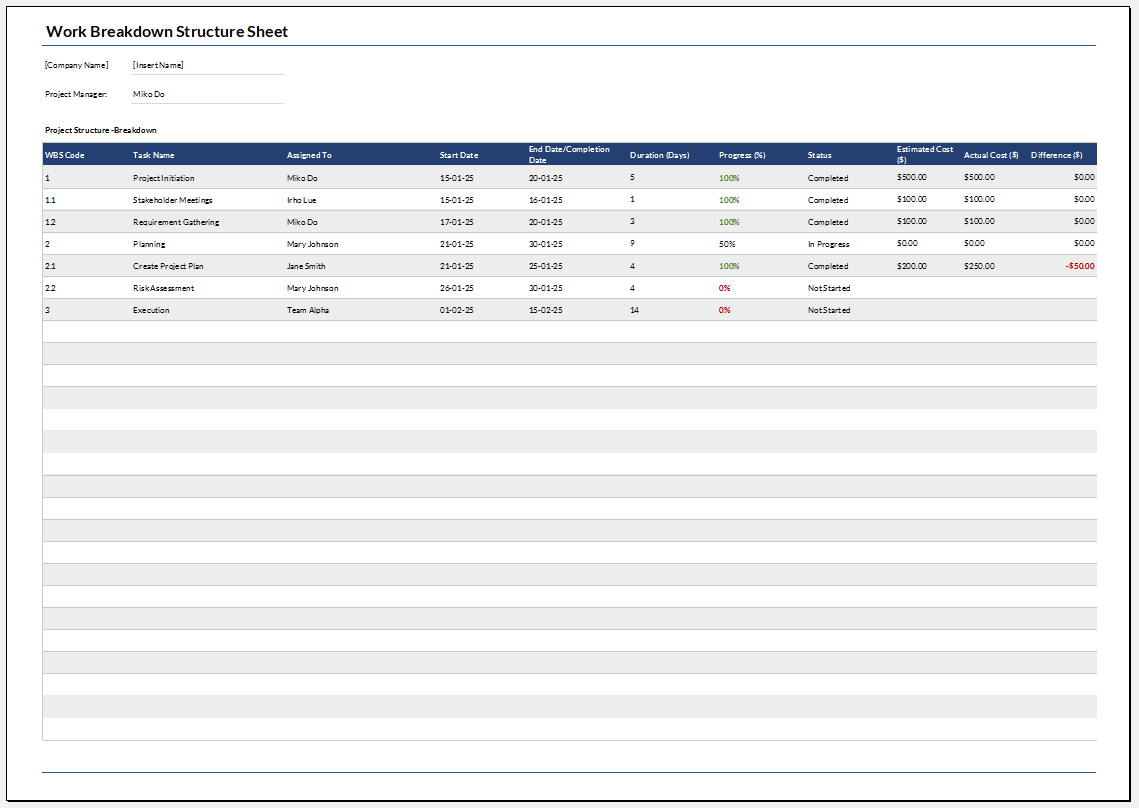
A WBS template is commonly created in Excel or similar spreadsheet tools. Here’s how to format it:
Step 1: Add Project Information
Include the following at the top:
- Project Title
- Company Name
- Project Manager
- Date
Step 2: Define Main Tasks
Divide the project into major tasks or phases based on timelines, activities, or milestones.
Step 3: Add Sub-Tasks
Break each main task into smaller sub-tasks that represent the actual work to be completed.
Step 4: Include Task Details
For each sub-task, include:
- Assigned person
- Start and due dates
- Status or progress updates
- Notes or weekly reports
Summary
A Work Breakdown Structure template is a powerful tool that simplifies project planning and execution. By breaking a project into manageable components, it improves organization, communication, budgeting, and overall project control.
When designed properly, a WBS ensures that all tasks are clearly defined, responsibilities are assigned, and project goals are achieved efficiently. Here we have the samples for help.
Preview

- Children’s Daily Activity Reward Sheet
- Winter Clothing & Gear Budget Sheet
- Winter Utility Expense Template
- Fuel & Equipment Sheets
- Monthly Attendance Sheet for Employees
- Student Entry & Exit Log
- Gantt Chart for Smaller Projects
- Behavior Log of Child for Schools
- Loan Repayment Tracker
- Product Sales Tracker Template
- Debit Memo Template for Excel
- Winter Attire Inventory
- Financial Projections Worksheet
- Employee Absence Tracker
- Weekly Sales Report Template
← Previous Article
Competitor Analysis SheetNext Article →
Employee Pay Stub Template
Leave a Reply