Rental Inventory Checklist Template
Renting a property furnished with the owner’s belongings is very common. However, certain measures are taken to ensure that tenants use these items responsibly and maintain them in good condition.
The inventory of a landlord’s leased property available for rent is referred to as the rental inventory. In the rental business, effective inventory management plays a crucial role and can significantly impact the business’s revenue. However, it is important to note that these benefits can only be realized if all assets are managed efficiently and systematically.
What is a rental inventory checklist?
Tenants should always be fully informed about the property and its contents. Various documents are typically used to record the rental process, and one of the most important and commonly used is the Rental Inventory Checklist.
It is an important tool used by real estate professionals and property managers to keep track of rental properties and all their contents. In addition to listing the items, the checklist also documents the condition of the property before the tenant moves in.
Why do people use rental inventory checklists?
The checklist can be used for a variety of purposes. Some of the main uses are listed below:
For documenting damages
Since the checklist records the condition of all items in the rented property, documenting any damages is obvious. Any pre-existing damage is noted before the tenant takes possession, ensuring that the tenant is not held responsible for existing issues.
For keeping track of content
When a property is rented along with its contents, the owner may feel uncertain about the safety of their belongings. A rental inventory checklist lists every item to protect the property, and some owners even count each item for added security. This list typically includes furniture, electronics, and a variety of other household items.
Keeping track of all items in the rental inventory is especially important when providing a furnished apartment or house for a short-term stay. Using a checklist gives peace of mind, knowing that steps have been taken to safeguard the property and its contents.
For documentation of the condition
All furniture and other items, regardless of their age or condition, should be carefully documented in their current state. Tenants should be made aware of the condition of these items and are expected to handle them with care. Since these are the property of the landlord or owner, it is important to emphasize that extra caution is required while using them.
What are the main parts of the rental inventory checklist?
The key components of this checklist include:
Information about the property
The checklist begins by specifying the details of the property to clearly indicate which asset it refers to. It typically includes the address, type of property, and other relevant specifications.
Description of the content
The checklist includes all items present on the property. Items from different rooms or sections of the house are listed separately to ensure clarity and accurate documentation.
Condition of items
The condition of each item in the inventory list is clearly recorded. For brand-new items, the term “New Condition” is indicated. Similarly, the condition of all other items is noted accurately. Any minor imperfections, such as scratches on furniture or wear on appliances, should also be documented.
Signatures
Once the checklist is complete, the landlord should sign it. This confirms that the landlord agrees with the information provided, and the checklist can be given to the tenant before they occupy the property. After signing, the landlord cannot raise any disputes regarding the condition or description of the items listed. In some cases, signatures from multiple parties are obtained to ensure the document is more comprehensive and credible.
Here are the templates.
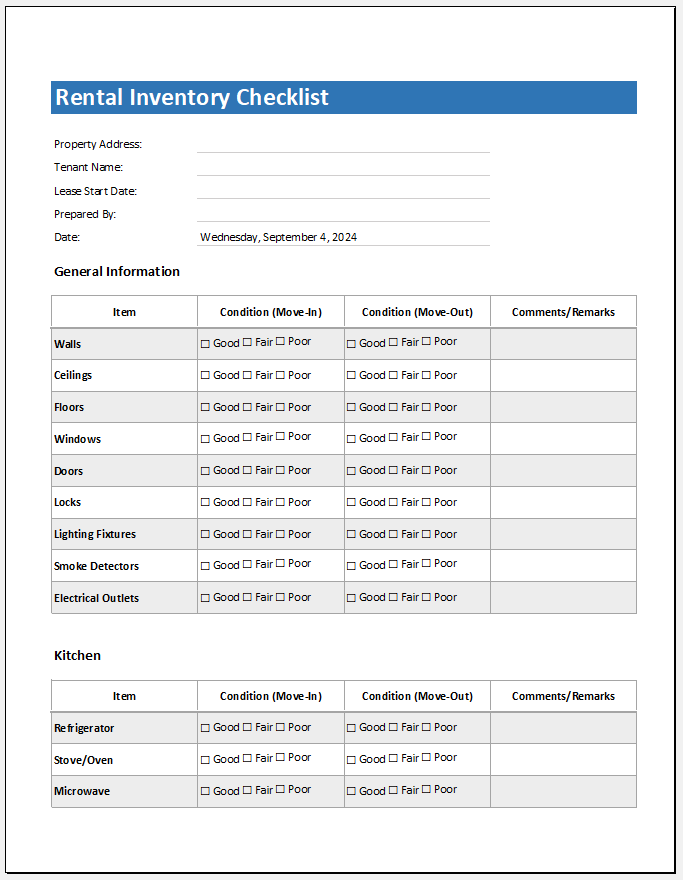
Excel Worksheet Template
Size: 102 KB
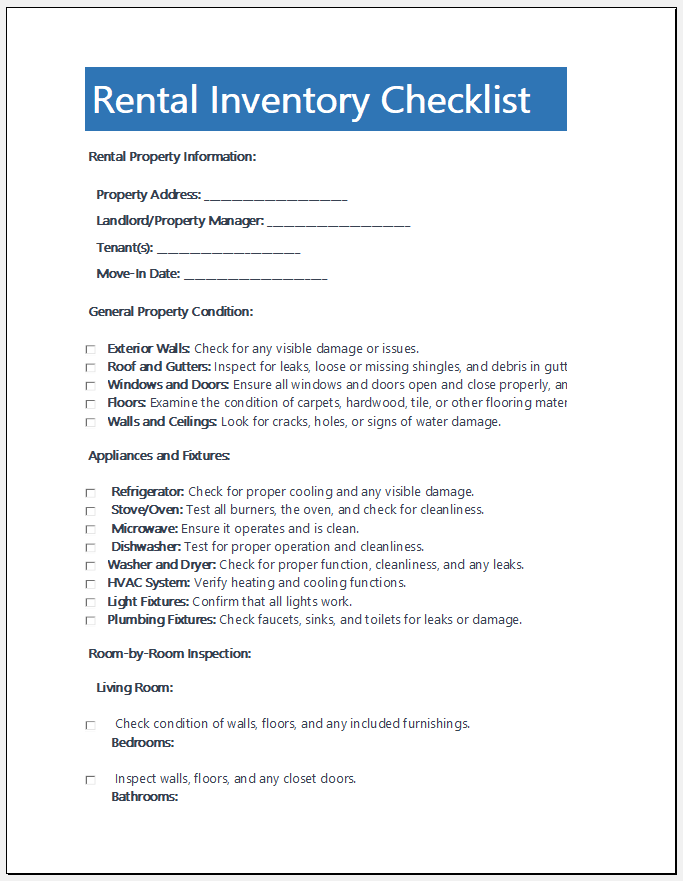
Inventory File: 203 KB
- Children’s Daily Activity Reward Sheet
- Winter Clothing & Gear Budget Sheet
- Winter Utility Expense Template
- Fuel & Equipment Sheets
- Monthly Attendance Sheet for Employees
- Student Entry & Exit Log
- Gantt Chart for Smaller Projects
- Behavior Log of Child for Schools
- Loan Repayment Tracker
- Product Sales Tracker Template
- Debit Memo Template for Excel
- Winter Attire Inventory
- Financial Projections Worksheet
- Employee Absence Tracker
- Weekly Sales Report Template
← Previous Article
Customer Support Representative Duty ListNext Article →
Construction Site Checklist Template