Expense Trends Budget Template
Every business aims to increase its profits while keeping expenses under control. However, in reality, earning more often requires spending more. A manufacturing company, for example, must manage a wide range of expenses to produce and sell its products effectively.
These expenses include raw materials, production costs, storage, transportation, shipping, quality testing, dealership commissions, and sales activities. In addition, utility costs such as electricity, employee salaries, and labor wages are unavoidable. If expert consultation is required, that adds to the overall cost as well.
Due to these multiple factors, business expenses tend to fluctuate and often increase over time, making it essential to monitor and manage them efficiently.
Understanding Business Expenses and Trends
Every business operates in a dynamic environment where expenses are constantly changing due to internal operations and external market conditions. Without a clear system to monitor these changes, it becomes difficult to understand where money is being spent and whether those expenses are contributing to growth. Simply recording costs is not enough. Businesses need a structured way to evaluate spending patterns over time. This is where tracking expense trends becomes essential, as it provides deeper insight into financial behavior and supports smarter decision-making.
The Need for Expense Analysis
To effectively control costs, companies often rely on financial analysts, economists, and accounting professionals. These experts study expense patterns and recommend strategies to optimize spending and improve profitability.
Before diving into the details, it is important to understand why tracking expense patterns is just as crucial as recording expenses themselves. Businesses that only monitor total spending often miss the bigger picture, how and why costs change over time. Recognizing these patterns allows companies to make proactive decisions, reduce financial risks, and improve overall efficiency. This is where a structured tool becomes essential to turn raw financial data into meaningful insights.
One of the most practical and efficient tools used for this purpose is an Expense Trends Budget Template.
What is an Expense Trends Budget Template?
An Expense Trends Budget Template is a structured spreadsheet that helps track and analyze a company’s expenses over a specific period.
Business costs do not remain constant, they change due to factors such as:
- Market fluctuations
- Changes in demand and sales
- Inflation and economic conditions
- Operational adjustments
This template allows you to record expenses regularly (monthly or yearly) and visually analyze trends. By doing so, you can identify patterns, control unnecessary costs, and make informed financial decisions.
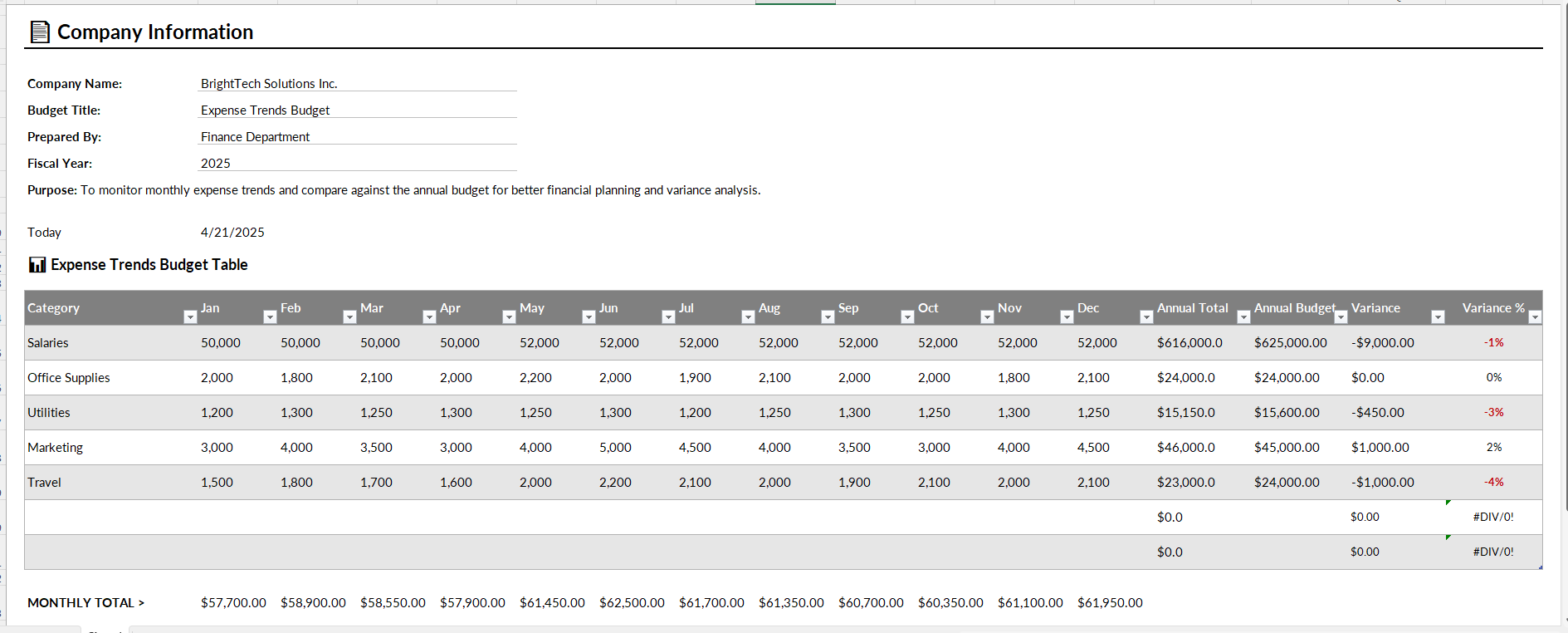
Once you understand what an Expense Trends Budget Template is and how it can help analyze your spending, the next step is to learn how to put it into action. The template is designed to be intuitive, allowing you to input your expense data, categorize costs, and track changes over time. With the built-in visual tools, such as charts and color-coded indicators, you can quickly identify trends, compare different periods, and make informed decisions to manage your expenses more effectively.
How to Use the Template
You can download and start using the Expense Trends Budget Template quickly and effortlessly. Once opened:
- Enter your expense data in the designated fields, including categories such as raw materials, utilities, salaries, transportation, and other operational costs.
- Track expenses over time, whether monthly, quarterly, or yearly, to capture fluctuations and seasonal patterns.
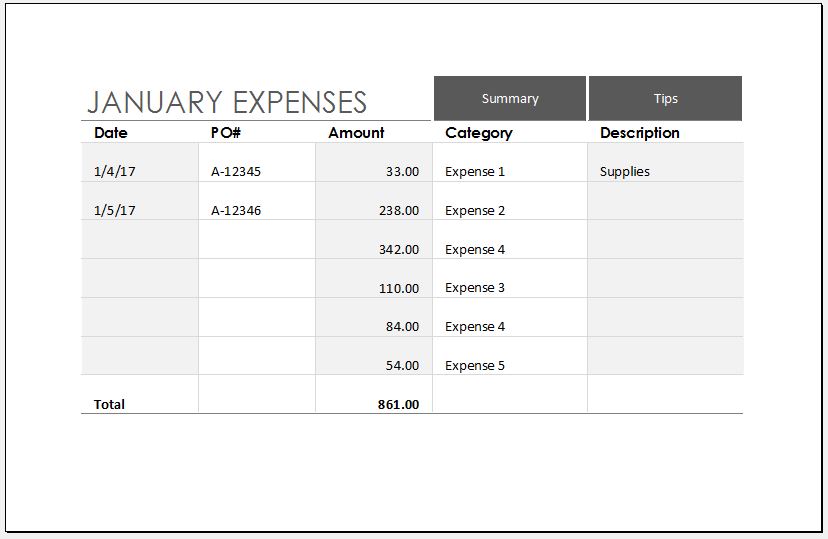
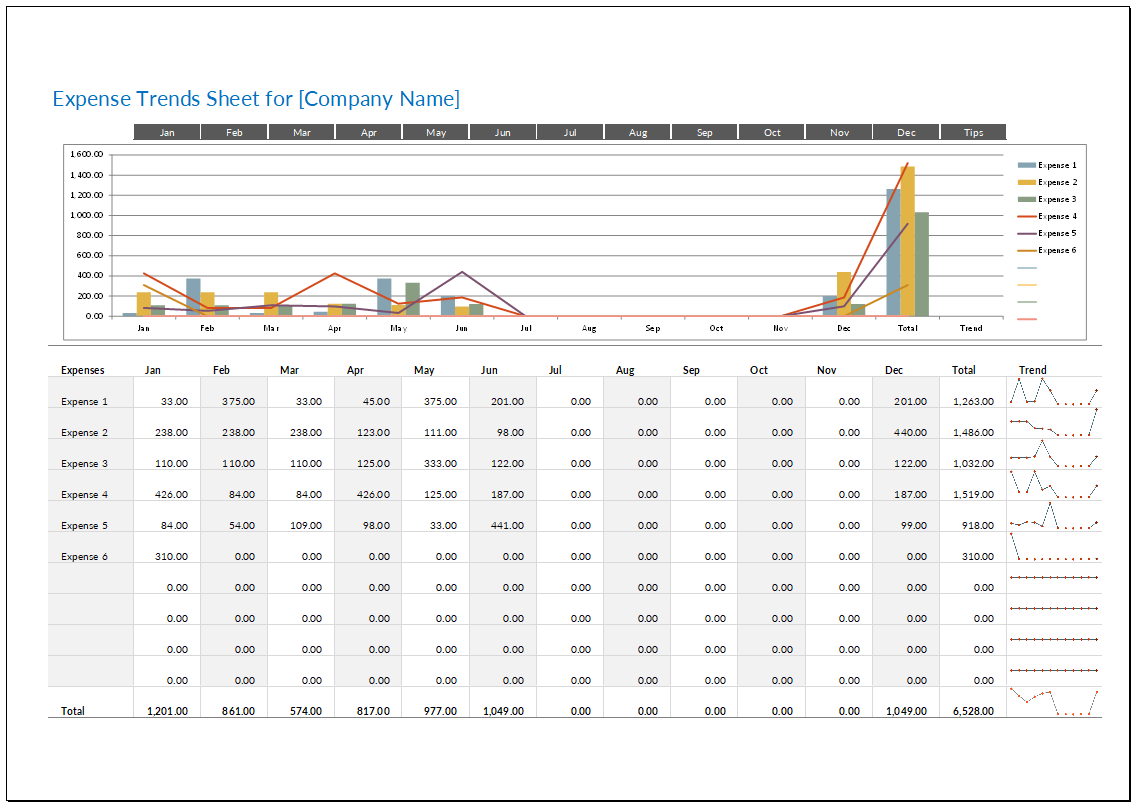
- Use the visual elements, such as colored spikes, graphs, and charts, to compare different expense categories and analyze trends at a glance.
These visual indicators make it simple to understand how your expenses are evolving, highlighting areas where costs are rising or opportunities to save. The template also allows you to easily adjust or add new categories as your business grows or changes, making it a flexible tool that adapts to your needs. By consistently updating the template, you gain a clear overview of spending habits, identify inefficiencies, and make data-driven decisions to improve financial management and profitability.
Customization and Flexibility
The template is fully customizable to suit your business needs:
- Modify categories and labels according to your operations
- Add your company name and logo
- Adjust sections based on your reporting requirements
This flexibility ensures the template can be tailored for any type of business.
Tips for Effective Use
- Update the template regularly to maintain accurate records
- Use consistent categories for better comparison
- Review trends monthly to identify cost increases early
- Take advantage of charts and visual indicators for quick insights
The use of clear visuals, such as colored spikes or graphs, makes the template easy to read and interpret.
Preview
Template #2
- Winter Clothing & Gear Budget Sheet
- Budget Vs Actual Statement
- Vehicle Mortgage Payment Calculator
- Spending and Savings Worksheet
- Personal Financial Transaction Register Template
- Wedding Expense Sheet Template
- Living Expense Calculator Template
- School Farewell Party Budget Worksheet
- Recreational Activity Budget Worksheet
- Friends Trip Budget Worksheet
- One Day Party Budget Worksheet
- Daily Food Expense in Office Worksheet
- Bar-b-que Party Budget Worksheet
- Summer Party Budget Worksheet
- Office Party Budget Worksheet
← Previous Article
Event Budget PlannerNext Article →
Yearly Budget Worksheet
Leave a Reply