Business Expense Budget Template
Business expenses are the costs incurred to operate a business and generate revenue and profits. They cover the necessary expenditures for smooth operations and are generally tax-deductible. Running and expanding a business without properly managing expenses can be challenging, so every company needs a systematic approach to track and control spending.
Effective business management requires careful monitoring of expenses. Costs are inevitable for businesses of all sizes, whether small or large. Budgeting is a key strategy that allows companies to track, plan, and monitor expenses over a specific period, helping ensure financial stability and profitability.
To maintain control and gain insights into spending patterns, a structured approach is essential. One effective method is using worksheets or templates to record and analyze expenses. This not only provides a clear picture of current spending but also helps anticipate future financial performance. Our tool is designed to help businesses efficiently manage all types of expenses, making tracking, analysis, and planning easier.
Why Tracking Business Expenses is Important?
Managing business expenses effectively is crucial for maintaining profitability and operational efficiency. A well-planned expense budget helps a business:
- Monitor Cash Flow: Know exactly how much money is going out and ensure the company can cover its obligations.
- Control Costs: Identify unnecessary spending and find opportunities to save.
- Support Decision-Making: Provide accurate financial information for making informed strategic decisions.
- Plan for the Future: Estimate upcoming costs and set realistic budgets for projects, departments, or the entire business.
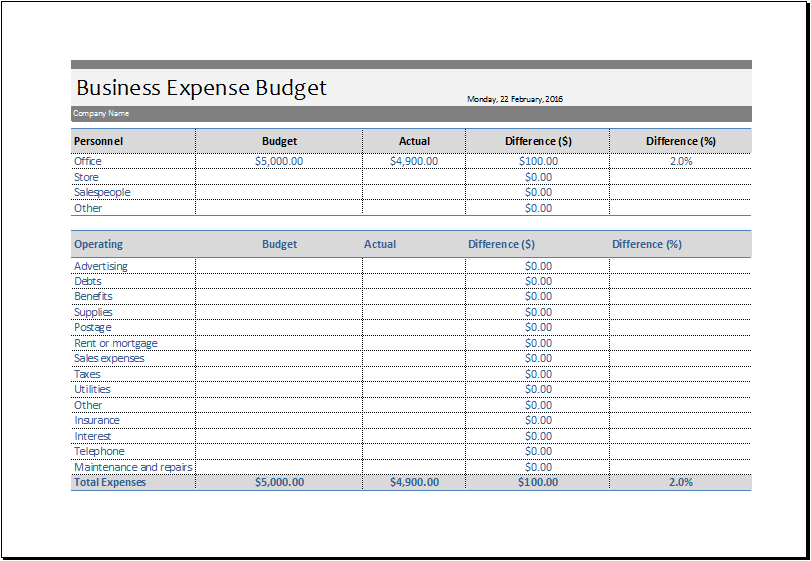
- Measure Performance: Compare actual spending against budgeted amounts to evaluate operational efficiency.
Common Types of Business Expenses
The most common types of business expenses are the following:
- Taxes are payments a company makes to the government based on its structure and operations.
- Advertising, marketing, and promotional activities are essential for establishing a company’s products or services in customers’ minds. Companies incur expenses for these activities, including online promotions on social media, banners, billboards, brochures, and other promotional materials.
- Labor wages are typically the largest recurring expense for a company, paid monthly or according to the defined pay period. Timely payment is important to keep employees motivated and productive.
- Businesses also need to pay for various insurance policies, such as property, life, disability, and other coverage, to ensure security and mitigate risks.
- Expenses for inventories, office equipment, and machinery are necessary for smooth operations. Office equipment includes furniture, computers, laptops, and other essential electronics.
- Rent and bills are unavoidable business expenses and must be considered when managing overall operational costs.
The Business Expense Budget Template
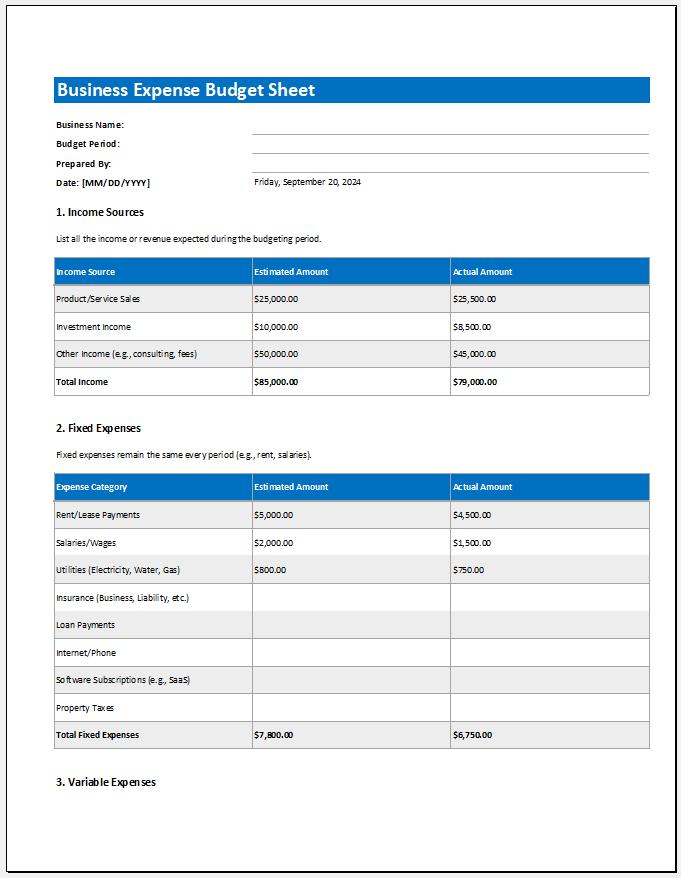
A business expense budget template is a tool designed to track and compare actual expenses against the annual or planned budget. It helps businesses manage finances efficiently and provides insights for better decision-making.
Key Benefits of the Template:
- Accurate Tracking: Records all expenses incurred, ensuring none are missed when calculating total costs.
- Time Efficiency: Reduces manual work by automatically tracking and summarizing expenses.
- Visualization: Includes charts and graphs to easily understand spending patterns.
- Cost Control: Helps identify unnecessary expenses and prevent overspending.
- Profit Planning: Supports achieving the company’s profit goals by comparing expenses to revenue.
- Periodic Monitoring: Tracks expenses, revenue, and cash flow regularly, preparing the business for both busy and slow seasons.
- Strategic Decisions: Guides management in making informed financial decisions, strengthening the company’s market position, and planning future budgets.
- Reusability: Unlike creating a new budget from scratch, this template can be used repeatedly, saving time and effort.
- Comprehensive Coverage: Should include the master budget, detailed breakdowns of each expense category, and an accountant’s review to guide the team responsible for monitoring business finances.
Download Excel File
Template # 2
Download Excel File
- Children’s Daily Activity Reward Sheet
- Winter Clothing & Gear Budget Sheet
- Winter Utility Expense Template
- Fuel & Equipment Sheets
- Monthly Attendance Sheet for Employees
- Student Entry & Exit Log
- Gantt Chart for Smaller Projects
- Behavior Log of Child for Schools
- Loan Repayment Tracker
- Product Sales Tracker Template
- Debit Memo Template for Excel
- Winter Attire Inventory
- Financial Projections Worksheet
- Employee Absence Tracker
- Weekly Sales Report Template
← Previous Article
Business Cash Budget TemplateNext Article →
Electric Energy Cost Calculator
Leave a Reply