
What is motor vehicle bill of sale?
It is a type of legal document which acts as a contract between the seller and the buyer of the vehicle. It records all the details regarding the sale of the vehicle. It is also used as a proof that the ownership of the vehicle has been transferred to the other person after getting money which is the sale price of the vehicle.
The bill of sale document is usually prepared by the seller. The sale of a vehicle can also take place without this document. However, there are some states where the use of this document is compulsory. It is always recommended to use it while selling your vehicle because it will save you from the conflicts that may occur in the future.
Key components of the bill of sale of vehicle:
The main items of this bill are:
- The vehicle’s make details
- Vehicle’s model number
- Colour
- VIN of vehicle
- Model year
- Year of manufacture
- Mileage details
- Names and addresses of seller as well as buyer
- Contact details of seller and buyer
- Signatures of both parties
- Total sale price of the vehicle
- Terms and conditions of the agreement
- Date of purchase
If you are selling the used vehicle, then there should be a brief description of the condition of the vehicle to prevent the situation of disagreement. Telling everything about your vehicle beforehand is always useful because it lets the buyer know what he is going to purchase.
Benefits of the bill of sale:
- A bill of sale is a very important document because it protects the rights of both buyer and seller. This document ensures that no one involved in the sale of the vehicle is being exploited.
- It keeps the record of the transaction that can be used in future.
- It clears everything between the buyer and the seller
- A bill of a sale is a legal document of evidence that proves that the seller has transferred the ownership and rights of using the sold property to the buyer.
Preview
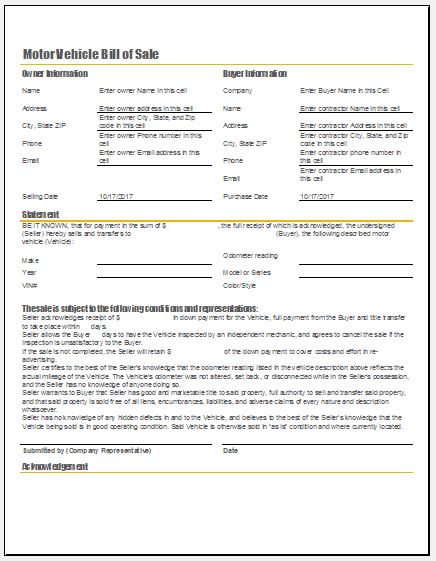
Bill of Sale Template
File Size: 112 KB | Format: MS Excel